
Introduction
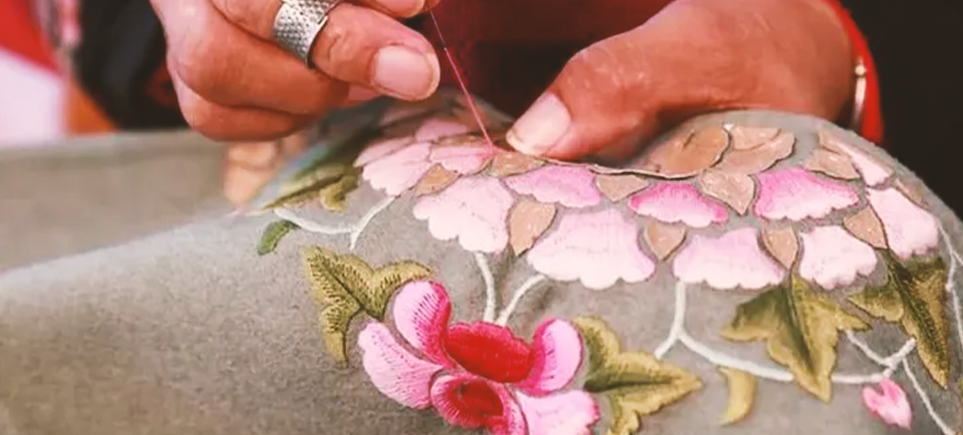
Chinese embroidery is a centuries-old art form that showcases a profound cultural heritage and skilled craftsmanship. Girls create complex figures and designs on clothes with the help of needles threaded with marvelous strands. It was originally used for ceremonial purposes and in royal courts for decoration. Over time, it changed a lot and became a symbol of refinement and careful craftsmanship.
History of Chinese Embroidery
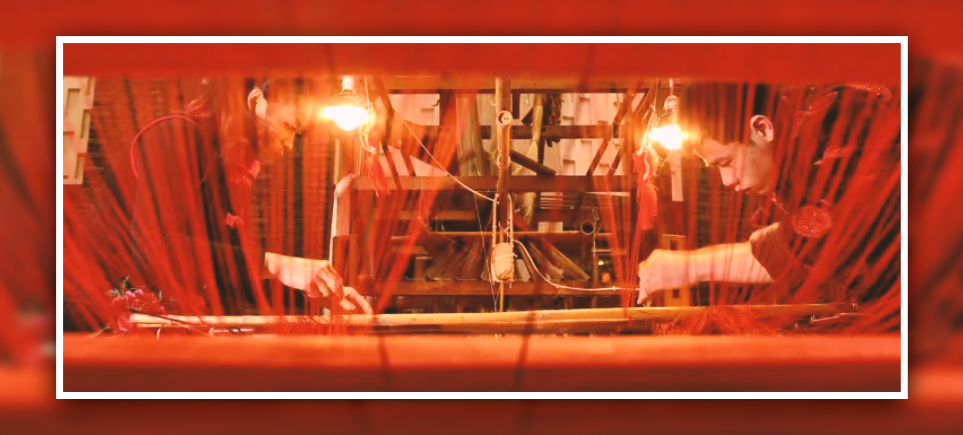
Chinese embroidery dates back to the Zhou Dynasty. It started as textile art. Over the centuries, it was used as an art to convey intricate symbols and philosophies. During the Tang Dynasty, Chinese embroidery developed a lot. Artisans created unique embroideries that became famous worldwide.
During the Ming and Qing dynasties, Chinese embroidery became even more sophisticated in terms of style and complexity. The use of symbolism, intricate designs, and labor-intensive methods made Chinese embroidery highly valued.
Style & Form
Chinese embroidery is available in different styles and forms. They have their own historical and regional influences. These styles carry different elements such as dragons, phoenixes, creatures from Chinese mythology, flowers, birds, landscapes, etc. Some of the most prominent styles are-
Shu Embroidery (Chengdu, Sichuan)
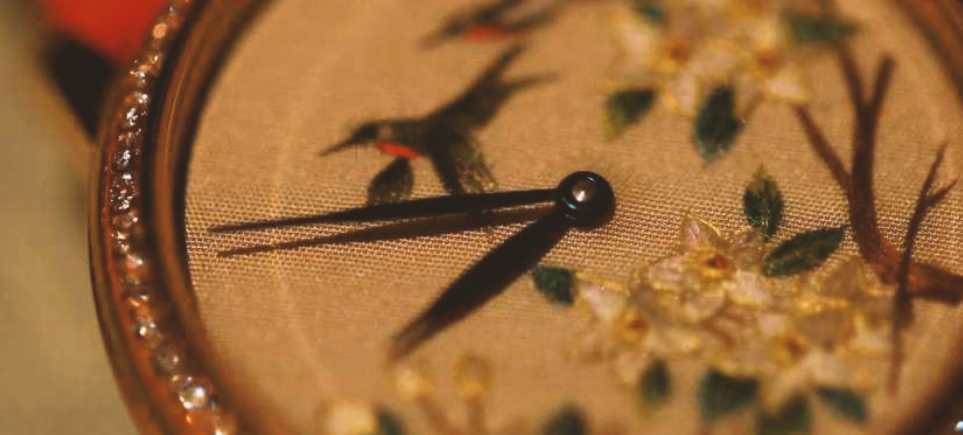
It is famous for its precision and elegance. Artisans use fine silk threads (and other fabrics also) and delicate stitches to create amazing patterns. Being one of the oldest embroidery styles in China, it portrays abstract symbolism and nature.
Xiang Embroidery (Changsha, Hunan)
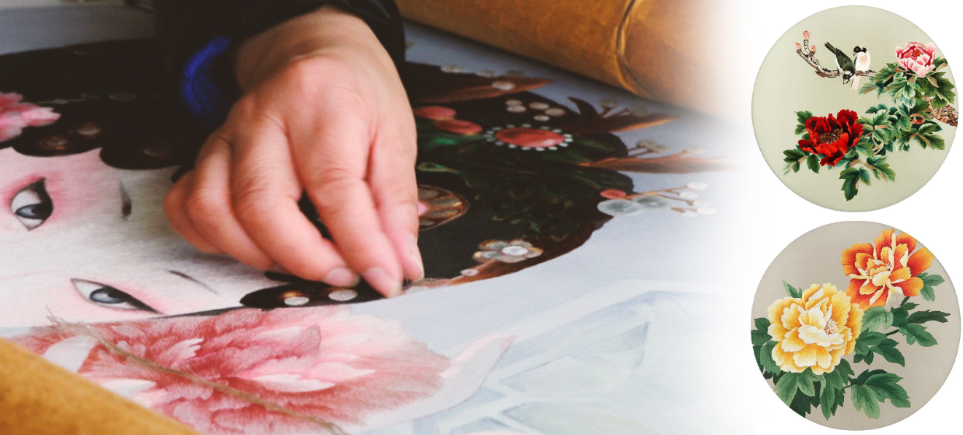
Xiang embroidery is known worldwide for its vibrant colors and intricate designs. Artisans often combine cultural symbolism with artistic expressions. They often portray flowers, animals, landscapes, etc. They use silk thread embroidery to display Hunan’s folk traditions and rich heritage.
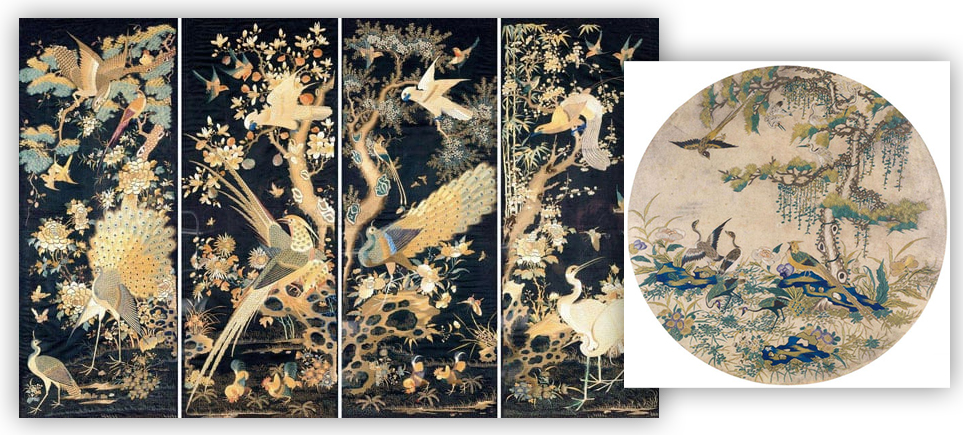
Yue Embroidery (Chaozhou and Guangzhou)
Yue Embroidery is famous for its detailed and delicate needlework, refined finish, and bright color combinations. It comes with various themes and is used on numerous products, such as banners, quilt covers, hanging curtains, mirror screens, pillow covers, shawls, shoes, etc.
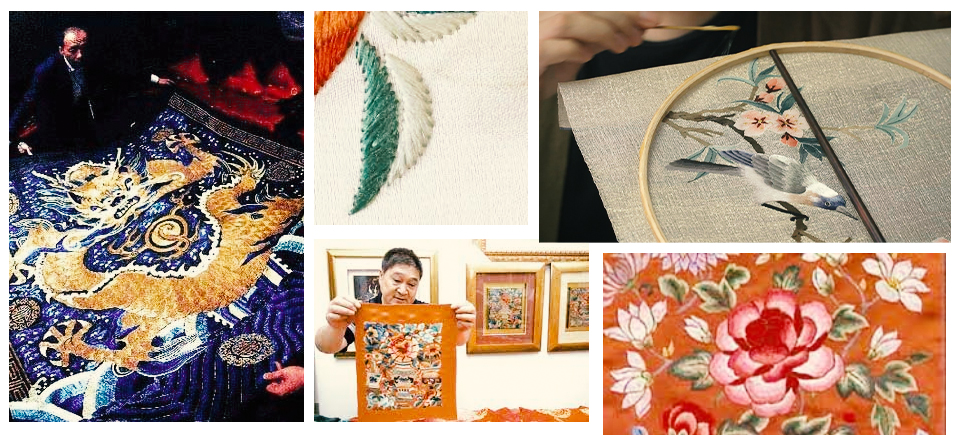
Jing Embroidery (Beijing)
It is also famous as palace embroidery. Flourished during the Ming and Qing dynasties, it portrays nature & historical events. Jing embroidery stands out with intricate patterns and unique color combinations. Artisans use silk threads and stitch carefully to create realistic art.
Process of Making Chinese Embroidery
Design Selection
To make Chinese embroidery, artisans first select or design the pattern. They take inspiration from poetry, nature, folk stories, etc. By using ink or pencil, the design is transferred onto fabric.
Thread Selection
Chinese artisans generally use silk threads, allowing them to create smooth, radiant, and high-quality embroidery. They combine multiple shades to make amazing embroidery designs.
Stitching
Depending on the design, stitch types are selected from short stitch, long stitch, & satin stitch. Artisans perform stitching flawlessly, ensuring each thread flows smoothly into the next.
Finishing
Once embroidery is completed, artisans wash the fabric and press it. Sometimes, it is framed or placed on a wall hanging or robe. It ensures that the embroidery retains its shape and threads remain intact.
Cultural Significance of Chinese Embroidery
Chinese embroidery is much more than an art. It has great cultural and philosophical meanings. Different motifs, such as animals, plants, nature, etc, portray various characters and virtues. For instance, peonies symbolize good luck and prosperity. The dragon is a symbol of good fortune, prosperity, and imperial power.
Embroidery is a part and parcel of traditional Chinese ceremonies. In old age, it used to work as a symbol of protection, spirituality, and status. So, the Han Chinese people used them to decorate temple banners and garments. In rural and urban China, women create amazing embroidery to express their artistic and emotional feelings.
Caring For Chinese Embroidery
To protect exquisite works of Chinese embroidery & maintain its beauty, these recommendations are helpful-
Protection From Sunlight
Direct sunlight can cause embroidery color to fade. So, keep the art away from the sun.
Regular Dusting
From time to time, gently dust embroidered items with a soft brush. It stops dirt accumulation. Don’t use harsh cleaning methods, as they can damage the threads and disfigure the embroidery.
Safe Storage
Keep Chinese embroidery in a dry or cool place. Use covers to protect it from pests and moisture.
Buying Chinese Embroidery From Cottage9
Chinese embroidery is a significant investment in cultural heritage. Whether you are looking for an art piece for home decoration or gifting, Cottage9 has it all. Explore the available options and collect your favorite Chinese embroidery today.