
Introduction
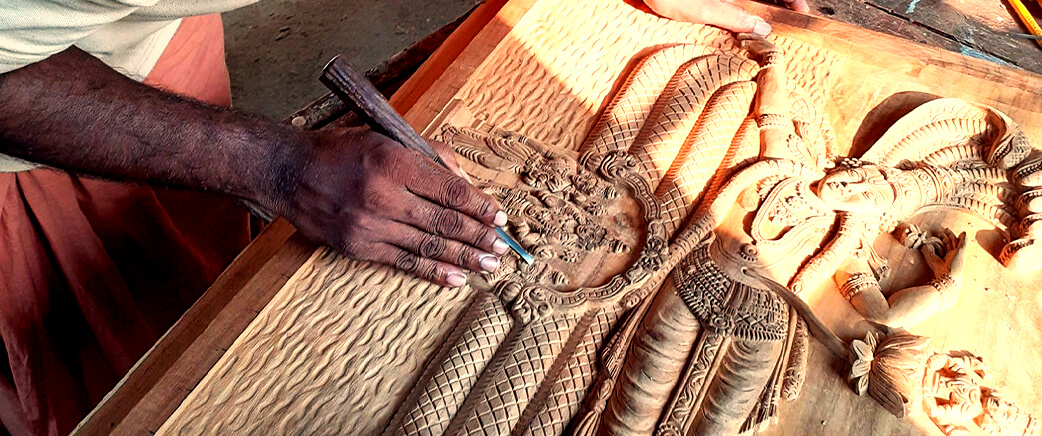
Since ancient times, Wood carving has been captivating individuals. It is not only just a craft- it's a conversation between artists and nature. Remember, every chisel mark, curve, and finished piece tells a story about the beauty hidden behind the wood carving. Using their expertise and experience, artists can turn a simple piece of wood into a famous artistic expression. They need to have patience, precision, and a clear understanding of the material to come up with timeless art.

History
Wood carving is a primitive art that dates back thousands of years. In the beginning of civilization, humans used to shape wood into idols, tools, and ornaments as required. In Egypt, people used to place wooden sculptures of gods in tombs & treat them as spiritual guardians.
In Asia, artists created complex wood carvings to reflect religious devotion and decorate temples and places. In the African continent, we can see wood carvings with deep ritualistic meanings. It was also used to represent spirits and ancestors. During the Middle Ages, this art quickly spread to furniture and Church architecture. In India and Southeast Asia, we had many temples with wood carving displaying gods, nature, and other crucial elements of everyday life. It was associated with India's cultural identity in ancient times.
Nowadays, despite the prevalence of technology and the production of different types of art, traditional wood carving is also relevant.
Style & Form
Wood carving is available in a wide range of styles and forms.
Sculptural Carving
It is used to create statues, figurines, and abstract sculptures as required. Artists bring wood to life in three dimensions to display their devotion towards God and express the full potential of the material.
Whittling
It is considered one of the most basic and personal forms of wood carving. Artists are just a knife for whittling. They use this ancient art to create decorative items or small statues.
Relief Carving
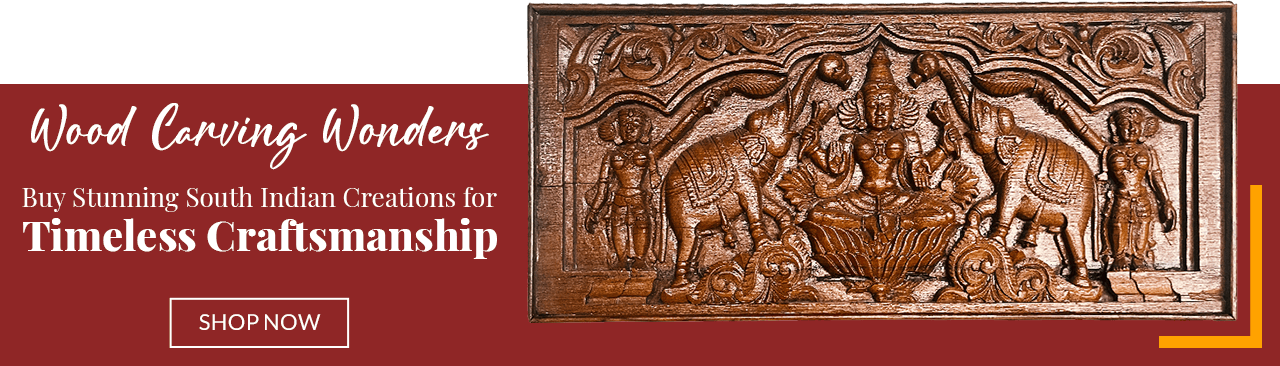
Using this technique, artists create sculptures slightly differently from a flat background. It helps to create perspective and beautifully expresses art. It is famous for its complex detailing. It is used to decorate temple doors, furniture, and wall panels.
Chip Carving
It is a decorative method in which artists remove small chips of wood to create geometric patterns and textures as required. This art is simple but looks very elegant. It is used for decorative panels or ornamentation on boxes.
The Process of Making a Wood Carving
Creating a wood carving requires artists to follow a sequence and use their creativity.
Choosing the Wood
It is the first step to creating amazing wood carving. Selecting the right wood allows them to express their art beautifully and ensures their durability to a great extent. Some artists use softwoods (like basswood) or while others prefer hardwoods, such as oak, teak, etc.
Planning And Design
Artists mull over the design of wood carving and the overall concept of the art. Sketch the design to draw it directly on the wood as per the requirement.
Shaping The Wood
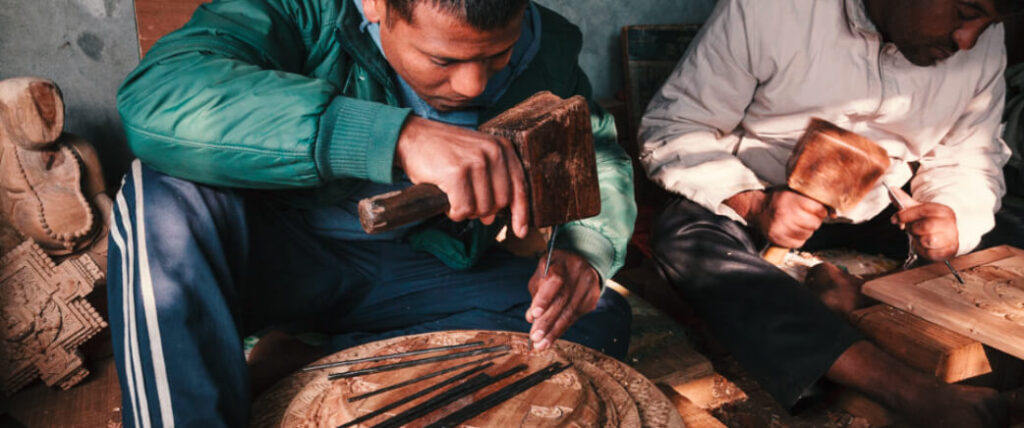
Artists use chisels and gouges to remove large sections of wood and try to shape the sculpture from the raw material.
Adding Fine Details
After shaping the wood, artists start creating facial features, textures, patterns, or flowing lines to define the art’s character.
Sanding and Finishing
As soon as wood carving is complete, artists use rasps or sandpaper to smooth the surface. They treat it with polish, wax, or oil to enhance its aesthetics and protect it from moisture.

Cultural Significance of Wood Carving
Wood carving has profound cultural and spiritual importance worldwide. It is a powerful medium for storytelling, decorating premises, and important buildings, etc. In India, we often see carvings on temples, furniture, and doors. They all symbolise gods, important events of history, animals, natural elements, traditions, etc. It also represents the transformation of culture and habits throughout the civilization. With traditional wood carving, we can preserve cultural wisdom and pass it to many generations.
Caring For Wood Carving
Don't Put Them In Direct Sunlight.
Don't keep the wood art in direct sunlight for a long time. It can cause the wood to fade or crack.
Avoid Humidity
Wood expands and contracts when it comes in contact with moisture. So keep it in a dry and stable environment.
Dust Regularly
Protect wood carving from dust. Use a soft brush or cloth to remove it gently. Avoid using harsh chemicals.
Apply Natural Oils
From time to time, apply linseed oil or take oil. It will help keep the wood carving in its original form and maintain its look..
Handle with Care
While moving the art or cleaning it, hold the base, not the delicate part. It helps to avoid accidental damage to wood carving.
Shop Wood Carving From Cottage9
At Cottage9, we offer beautifully designed & handcrafted wood carvings. Our artists pay attention to all the details of the art. So, each piece we have a symbol of high-quality wood carvings. Shop now.