
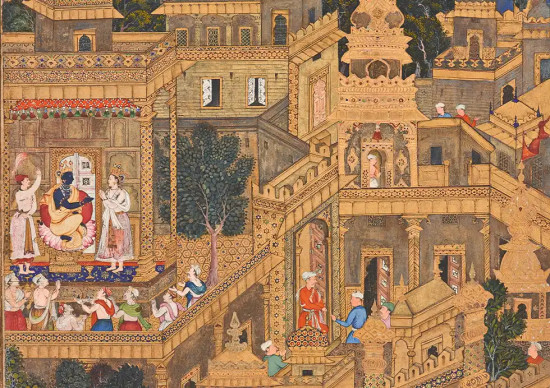
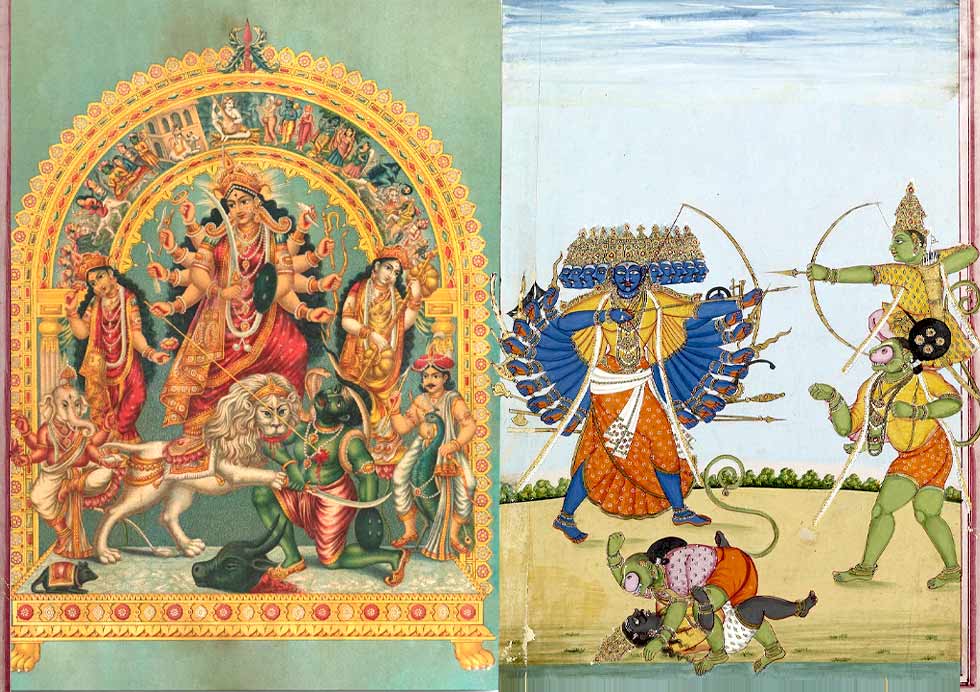
Vijayadashami and Navratri belong to the same stretch of the autumn calendar. Navratri comes with nine nights of worship, mostly of Goddess Durga, and Vijayadashami lands on the tenth day as a celebration of victory. Some families remember Goddess Durga defeating the demon Mahishasura. Others remember Lord Rama defeating Ravana. In this blog, we will look at how Vijayadashami and Navratri fit together, what each story says, and how people celebrate the day.
What Is Navratri, and What Does the Festival Celebrate?
What Is Navratri, and What Does the Festival Celebrate?
Navratri simply means nine nights. It is devoted to Goddess Durga, who is worshipped as Shakti, the divine feminine energy. Each day is linked with one of her nine forms, together called the Navdurga. Of the two major Navratris each year, the autumn one, Sharad Navratri, is the one that builds up to Vijayadashami. How people observe it depends a lot on where they live. Some families fast, some only eat simple food, and some just light a lamp each evening. Many set up a kalash, a sacred pot, on the first day, and many read the Devi Mahatmya, a text praising the goddess. In Gujarat, nights are for garba. In Bengal, the festival is Durga Puja, with big decorated pandals.
What Is Vijayadashami, and When Is It Celebrated in 2026?
What Is Vijayadashami, and When Is It Celebrated in 2026?
Vijayadashami literally means “the tenth day of victory.” You will also hear it called Dussehra, depending on where you are in India. Vijayadashami falls on the tenth lunar day of the bright fortnight of Ashwin. The date varies each year according to the Hindu lunar calendar. This year, Vijayadashami falls on Tuesday, October 20, in most parts of India. Sharad Navratri begins on Sunday, October 11, and its main nine-day observances conclude on Monday, October 19. Durga Ashtami and Maha Navami are observed on October 19 in many Indian calendars, while regional observances may differ. In Bengal, Durga Puja follows a different regional schedule, with Vijaya Dashami on Wednesday, October 21.
Festival dates and rituals can vary by region because of differences in local calendar traditions and observances. Puja timings vary by location, so check your local panchang for the correct muhurat. Why the tenth day? Both big stories end with a win on this day. Durga over Mahishasura and Rama over Ravana. Lots of people also use it to start something new, whether that’s a course, a job, or a small business.
How are Vijayadashami and Navratri connected?
How are Vijayadashami and Navratri connected?
Sharad Navratri and Vijayadashami are closely connected in the Hindu festival calendar. The nine nights are devoted to worship, prayer, and fasting, while the tenth day celebrates victory. For devotees of Goddess Durga, this marks her victory over Mahishasura. In Bengal and neighboring regions, Vijayadashami also marks the conclusion of Durga Puja. For devotees of the Goddess, the connection is direct. They worship Durga through the nine nights, and on the tenth day they celebrate her victory over Mahishasura.
For many families in Northern India, the day belongs to Lord Rama. Ramlila, a stage retelling of the Ramayana, is performed through the Navaratri days and builds toward the day Ravana falls. Here, Navratri works as the lead-up, and Dussehra is the finish. So the festivals share a calendar and a theme, good winning over evil. Some regions focus on Durga, some focus on Rama, and some honor both. Although both traditions celebrate the victory of good over evil, the stories of Goddess Durga and Lord Rama remain distinct.
Vijayadashami Story: The Victory of Good Over Evil
Vijayadashami Story: The Victory of Good Over Evil
Goddess Durga’s Victory Over Mahishasura
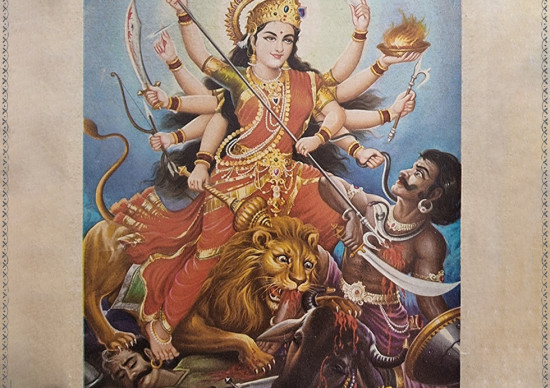
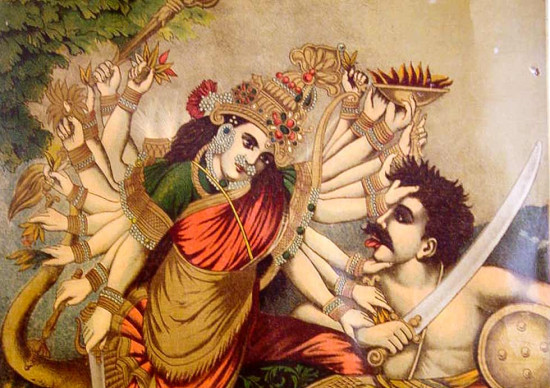
The Devi Mahatmya recounts the story of Mahishasura, a buffalo demon who received a boon that made him nearly unbeatable. Power went to his head. He attacked heaven and threw the gods out. When they could not stop him, they pooled their energies, and from that light, Goddess Durga appeared. Each god handed her a weapon.
In popular tradition, Goddess Durga's victory is associated with the nine nights of Navratri and the celebration of Vijayadashami on the tenth day. That is why she is called Mahishasuramardini, the one who slew Mahishasura, and why her victory is tied to both the nine nights and Vijayadashami itself.
Lord Rama’s Victory Over Ravana
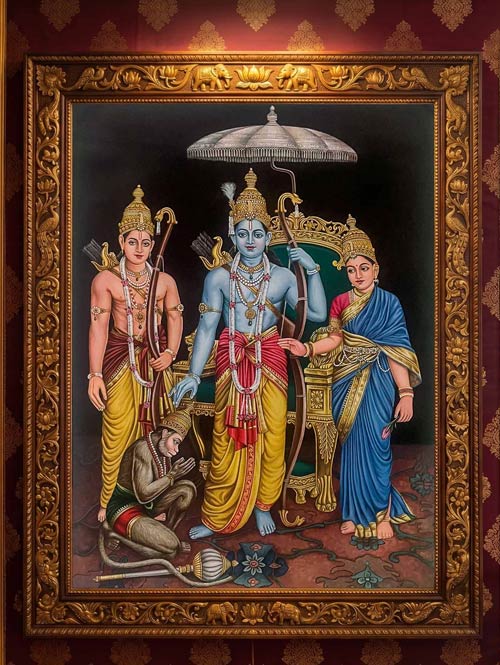
In the Ramayana, Ravana, the king of Lanka, carries off Sita, Rama's wife. Rama sets out with his brother Lakshmana, Hanuman, and their allies to bring her home. After a long war, Ravana is defeated. People remember it as dharma, meaning right conduct, winning over pride and wrongdoing. That is why many northern towns burn tall Ravana effigies at dusk, often next to figures of his brother Kumbhakarna and son Meghnad. The fire stands for evil being destroyed.
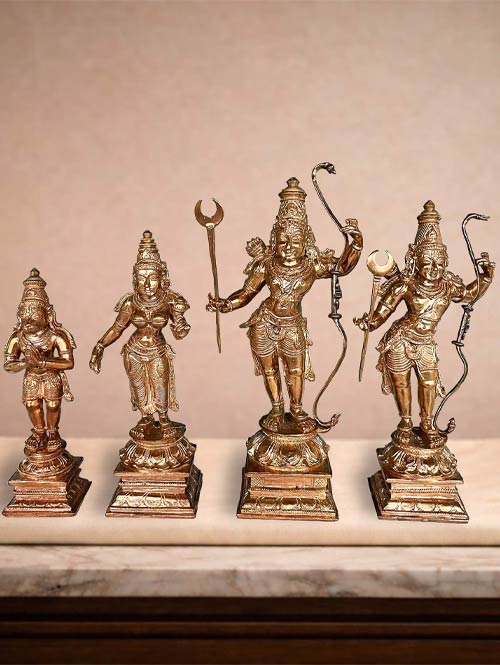
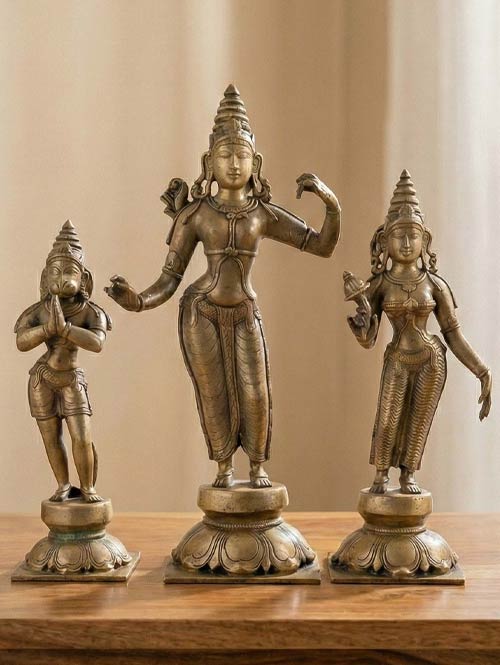
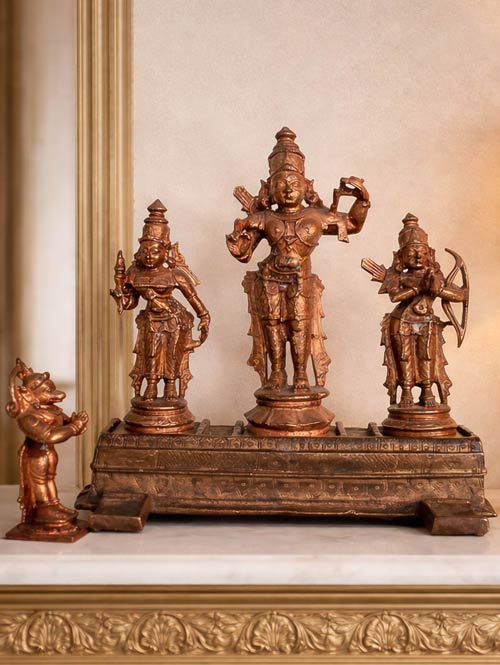
Families who worship Lord Rama may keep a depiction of Rama and his divine court in their home mandir. Cottage9 offers handcrafted pieces such as the Sri Rama Darbar Figurine Set and the Sri Rama Copper Statue featuring Sita and other figures.
Vijayadashami 2026 Puja and Celebration Traditions
Vijayadashami 2026 Puja and Celebration Traditions
Vijayadashami puja traditions vary by region and family. Many people observe the day through Durga Puja rituals, Ramlila, or other local customs. Many families start with prayers at home or a visit to the temple, and some read the Ramayana or the Devi Mahatmya. Some worship the Goddess, others worship Lord Rama. In Bengal and nearby regions, Durga Puja closes with visarjan, when the Goddess’s idols are immersed in water. Devotees treat it as a farewell, as if she is going back home.
In parts of South India, people worship tools, books, and instruments around Navami and Vijayadashami, and in Kerala, children are introduced to writing in a ceremony called Vidyarambham.
Families also exchange Vijayadashami wishes with relatives and friends. Here are a few simple messages for the occasion:
- May Goddess Durga give you strength and courage in the year ahead.
- Wishing you and your family a peaceful and Happy Vijayadashami 2026.
- May Lord Rama inspire you to choose honesty and kindness every day.
What Vijayadashami and Navratri Mean Spiritually
What Vijayadashami and Navratri Mean Spiritually
Both traditions share a central message: good can overcome evil. Goddess Durga’s story highlights courage and divine strength, while Lord Rama’s story emphasizes righteousness, duty, and keeping one’s word. For some, the day is personal. They think about their own anger, pride, and jealousy and what needs to change.
Devotional Idols and Artwork for Your Home Altar
Devotional Idols and Artwork for Your Home Altar
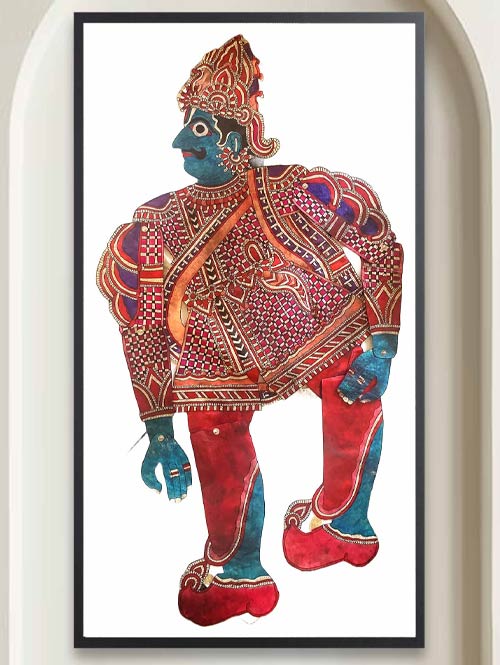
Many homes set up a small mandir or prayer corner for Navratri and Vijayadashami. Having an image or idol in front of you can make daily prayer feel a little more settled. Some families pray to Goddess Durga as Shakti, and others celebrate Lord Rama’s victory over Ravana. Either way, Cottage9 has devotional idols, murtis, and traditional artwork for home worship.
How to choose one
- Start with your space. Measure the height, width, and depth of your mandir shelf before you pick anything, because an idol that looks small online can feel big on a narrow shelf.
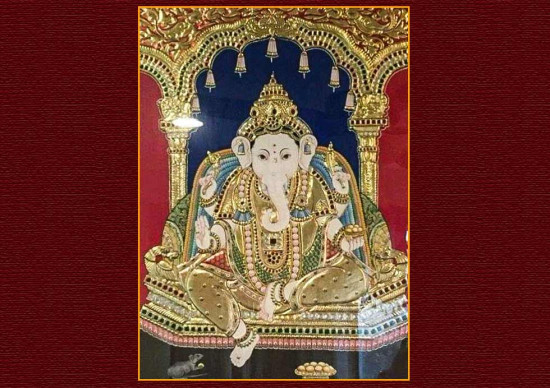
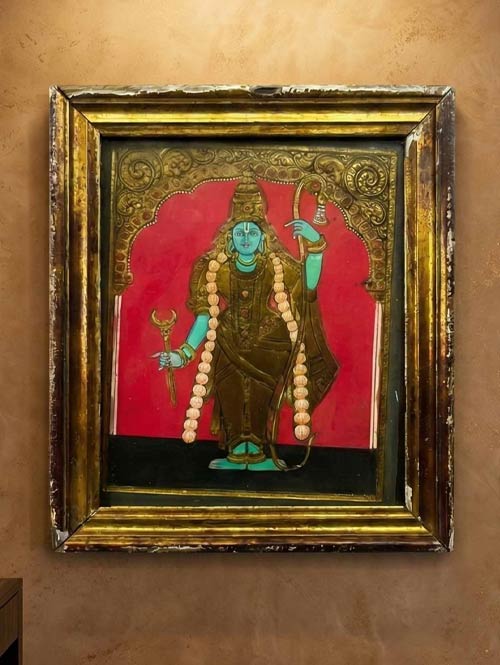
- Next, consider which deity or devotional form your family worships. That might be Goddess Durga seated on her lion, a full Sri Rama Darbar set, or a Tanjore painting for the wall.
- Last, read the product page. It lists the size, the material, such as brass or copper, and the finish, so you know what you are getting.
If you would like a devotional piece for your home mandir, browse Cottage9’s collection of traditional idols and artwork. You can choose a Sri Rama Darbar set, a Rama statue, or devotional wall art to suit your prayer space.
Final Thoughts
Vijayadashami and Navratri run together as one festival season. The nine nights are for prayer, and the tenth day is for celebrating a victory, whether it is Goddess Durga over Mahishasura or Lord Rama over Ravana. However your family celebrates, both traditions remind us of the victory of good over evil. If you are looking for a devotional piece for your home mandir, browse Cottage9's collection of Goddess Durga and Lord Rama idols and traditional devotional artwork.
Frequently Asked Questions
When is Vijayadashami 2026?
Vijayadashami 2026 falls on Tuesday, October 20, in most parts of India. Sharad Navratri begins on October 11, with its main nine-day observances concluding on October 19. In Bengal, Vijaya Dashami is observed on Wednesday, October 21. Check your local panchang for regional dates and puja timings.
Are Vijayadashami and Dussehra the same?
Yes. Vijayadashami and Dussehra are the same festival. It is celebrated on the tenth day of the bright half of Ashwin. What differs by region is the story people emphasise and the way they celebrate.
Does Vijayadashami come right after Navratri?
Yes, in the usual autumn calendar. Navratri covers nine nights, and Vijayadashami is the day after, so the two together make a ten-day festival season.
Which Vijayadashami story is the right one?
Some regions mark Goddess Durga’s victory over Mahishasura. Others mark Lord Rama’s victory over Ravana. They are separate traditions, and some families honour only one.
What time is the Vijayadashami puja?
It depends on your city. The Vijay Muhurat and other timings are worked out from local sunrise and sunset, so check a panchang set to your location.
Which Goddess Durga murti is good for a home mandir?
Choose one that fits your shelf and the form of the goddess your family prays to. Smaller idols suit compact mandirs, and larger ones suit a dedicated prayer room.