
If this is your first Karwa Chauth, you probably have a few questions. Why do women fast for a whole day? Where does Goddess Parvati fit in? Which story are you supposed to listen to? Maybe you grew up watching your mother keep the vrat, or maybe you don’t know anything about the Karwa Chauth story and ritual. This blog will cover what this festival means, the Goddess Parvati story, where it belongs, and the Karwa Chauth rituals from sargi to moonrise.
What is Karwa Chauth?
What is Karwa Chauth?
Karwa Chauth is a fasting festival. Women keep a vrat as a vow. This vrat is kept by married women who pray for their husbands to live long and healthy lives. It ends when the women see the moon. The name comes from the karwa, a small pot with a spout. During the puja, this pot is filled with water. Beyond the rituals, the day is about commitment, patience, and the family two people build together. It is also a day when sister-in-law, friends, and neighbours sit together in houses and share stories. Even now, many men have started keeping fast with their wives.
Karwa Chauth 2026: Date and Significance
Karwa Chauth 2026: Date and Significance
According to Drik Panchang, Karwa Chauth 2026 falls on Thursday, 29 October. Some are also celebrating it on 28 October. It is worth checking with your family’s panchang or pandit. Why the difference? The festival falls on Krishna Chaturthi, the fourth day after the full moon, in the month of Kartik (Ashwin in some calendars). Since the fast ends only when the moon rises, the correct day is the one on which this tithi is running at your local moonrise. Where you live decides when the moon rises and when the puja is held, so look up your local timings before the day begins.
Goddess Parvati Story: The Divine Connection to Karwa Chauth
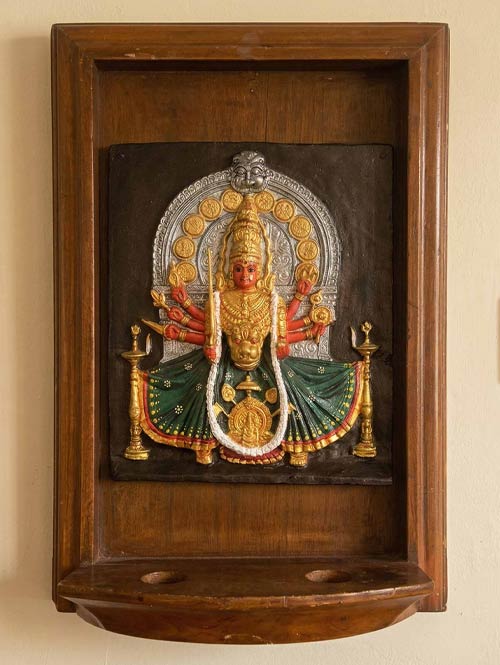
Goddess Parvati Story: The Divine Connection to Karwa Chauth
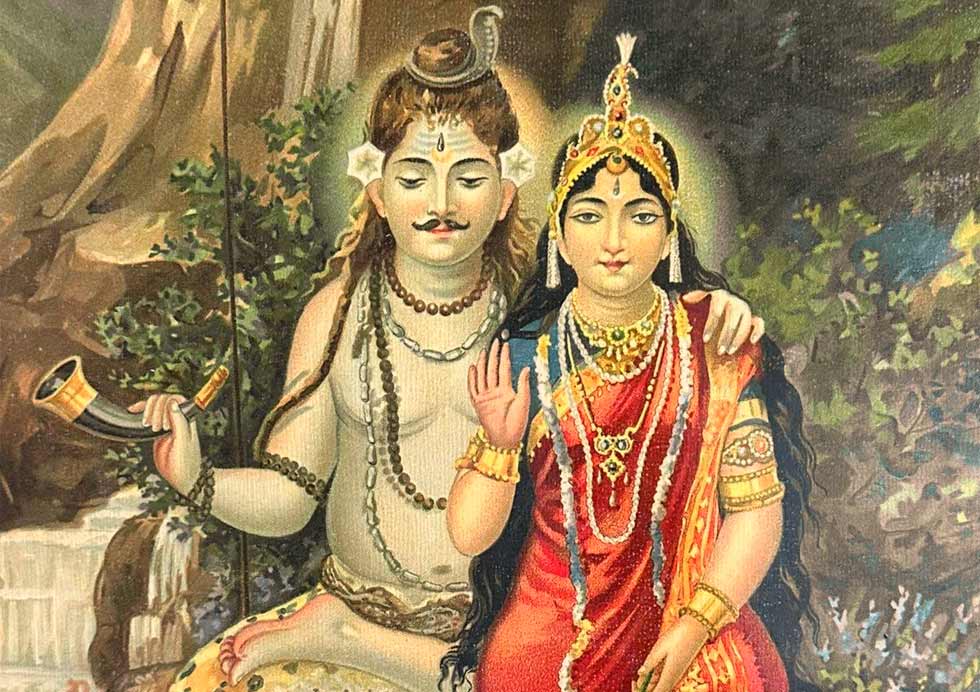
Goddess Parvati is Lord Shiva's consort. Devotees also call the goddess by the names Gauri and Uma. As per Puranic traditions, she was the daughter of the mountain king Himavan. She decided to marry Lord Shiva. Shiva was lost in meditation and did not respond. Even so, Maa Parvati held firm and kept going. She performed penance until Shiva responded to her. Such commitment reflects the kind of sincere, selfless love that lies at the heart of a married bond. That is why women on Karwa Chauth pray to Goddess Parvati and Lord Shiva as an ideal couple.
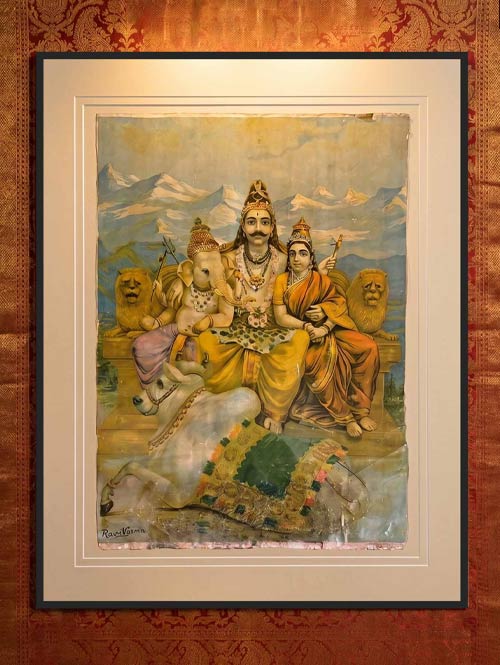
One thing needs to be clear. The Goddess Parvati story belongs to its own tradition and shouldn’t be confused with the Karwa Chauth katha. Believers connect the two through worship, and some telling of the katha brings Parvati in, as you will see below. But no text lets us say her penance is the origin of the festival, so this blog does not claim that. Some families place a shiva parvati ardhanarishvara idol in the home mandir for the day.
Karwa Chauth Vrat Katha
Karwa Chauth Vrat Katha
While observing a fast, devotees read or listen to a vrat katha, a sacred story linked to that particular vrat. No single Karwa Chauth vrat katha is the only right one, and most families follow the version they grew up with. Here are the best-known stories, kept separate.
Veervati’s Story
This is the version most often narrated. Veervati was the only sister of seven brothers, and they adored her. Her first Karwa Chauth fell while she was staying at her parents’ home, and as evening came, hunger and thirst left her feeling weak and light-headed. Her brothers could not bear it, so they made a false moon with a lamp behind a tree and told her to break her fast. She did, and soon heard that her husband had died. In many tellings, Parvati comforts and guides her. Veervati keeps the vow again with sincerity, and her husband is brought back to life.
Karva’s Story
In another telling, a devoted wife named Karva saw a crocodile seize her husband as he bathed in a river. Using a simple cotton thread, she tied up the crocodile and then approached Yama, the god of death, to plead for her husband’s life. Yama hesitated, but he feared her curse and gave in. The crocodile was punished, and her husband lived. Many believe the festival got its name from her.
Draupadi’s Story
Popular tradition tells of a time when the Pandavas were in trouble while Arjuna was away on penance. Draupadi asked Krishna for help. He advised her to keep the Karwa Chauth fast and recalled how Parvati had once been taught the same vow. Draupadi observed it, and the troubles passed.
In some households, Savitri is recalled as well. She trailed Yama to bring her husband Satyavan back to life, but her tale is more strongly associated with Vat Savitri. The common thread in all these tales is patience, honesty, and faith in the vow.
Karwa Chauth Rituals and Their Meaning
Karwa Chauth Rituals and Their Meaning
Karwa Chauth rituals differ by family and region, but the day usually flows like this.
Sargi
Before sunrise, women eat sargi, a meal often prepared or sent by the mother-in-law. Fruit. Dry fruits, sweets, and sevaiyan are common. It gives strength for the day and shows the elder’s care.
Fast
A lot of women go without food and water all day, breaking the fast only after the moon appears in the sky. Others take water or fruit, which is perfectly acceptable, especially for anyone pregnant, unwell, or on medication.
Getting Ready
In the afternoon, women dress in festive clothes, apply mehndi, and arrange the thali with a diya, roli, rice, sweets, a karwa, and a sieve. In many Punjabi and Haryanvi homes, women also give a gift called baya to their mother-in-law.
Karwa Chauth Puja
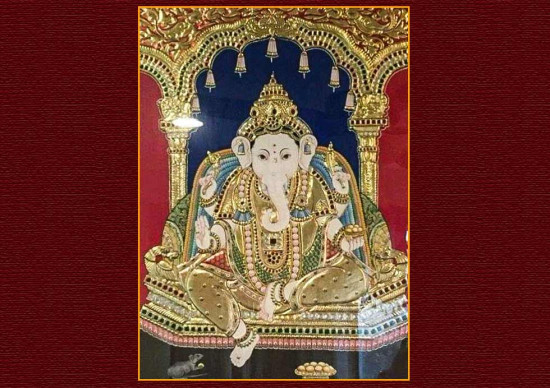
In the evening, Lord Ganesha is usually worshipped first, followed by Lord Shiva, Goddess Parvati, and Karwa Mata. In parts of Uttar Pradesh and Rajasthan, women often worship Gauri through a clay or painted image.
Hearing the Katha
Once the moon rises, women first view it through a sieve and then turn to look at their husbands through the same sieve. The husband gives his wife her first sip of water and a bite of food, which ends the fast.
Choosing a Goddess Parvati Murti For Your Home
Choosing a Goddess Parvati Murti For Your Home
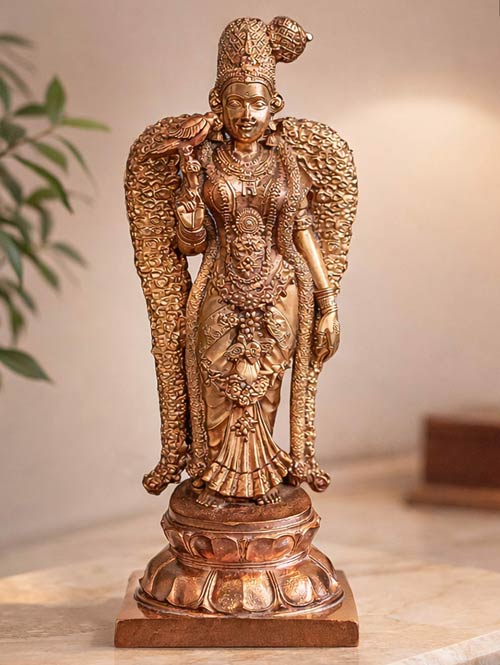
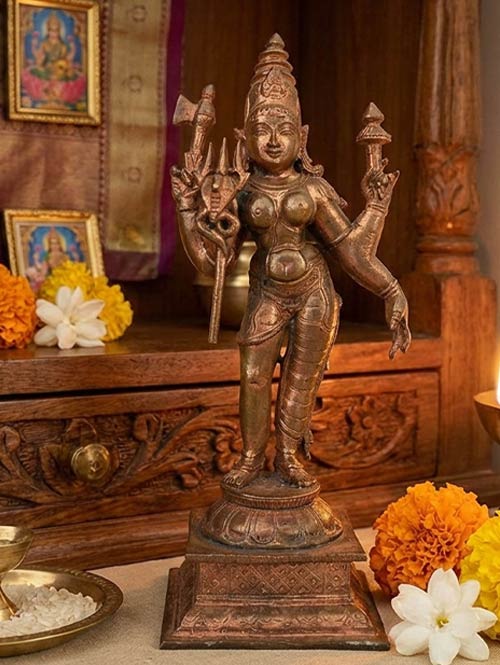
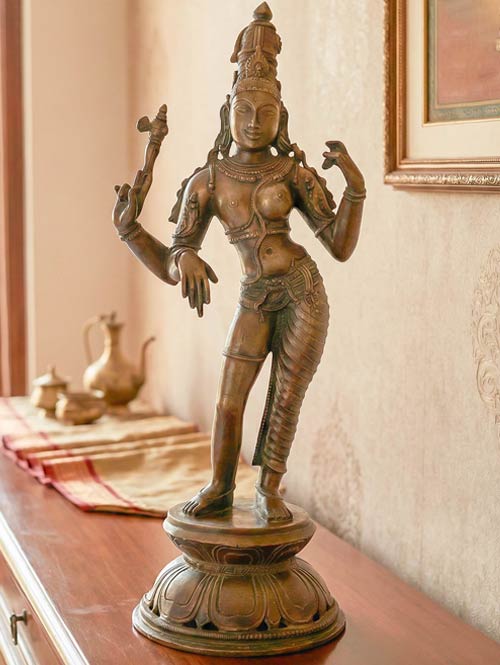
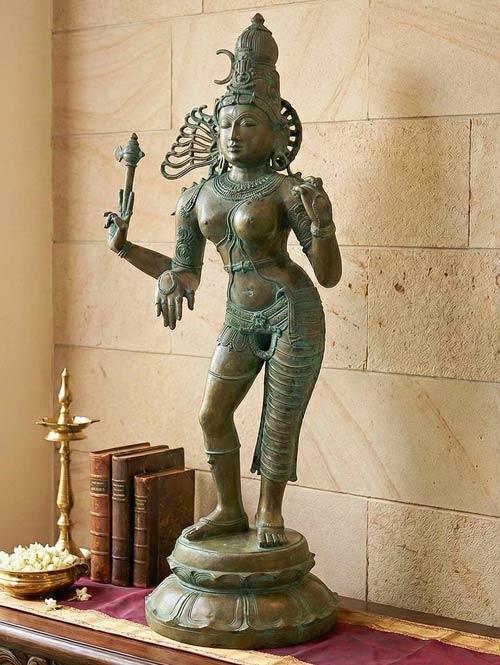
Many devotees keep a Goddess Parvati murti in the mandir all year , not just in October. A Parvati idol gives the mind a form to focus on while praying. A few things are worth thinking about before you choose:
Size
Measure your mandir shelf first. A small Parvati murti for home suits a compact prayer corner, while a larger Goddess Parvati statue works better in a dedicated puja room.
Material
Brass, copper, and bronze are common for devotional figures and need gentle cleaning.
Form
Parvati is shown alone, as Gauri, or beside Shiva. Pick the one your family worships.
You do not need an idol to keep the Karwa Chauth puja, and no blessing depends on buying one. But if you would like a sacred figure for your prayer space, Cottage9 offers devotional murtis and religious artwork. You can browse the Parvati idol collection at your own pace.
Final Thoughts
Many women say they remember the evening more than hunger. They remember the thalis, the songs, the shared wait for the moon. Parvati’s story of patience gives Karwa Chauth its spiritual background, and the katha reminds everyone to keep a promise honestly. Make your Karwa Chauth rituals beautiful by bringing traditional art from Cottage9. May your prayers be sincere and your day be a happy one with family.
Frequently Asked Questions
Why is Goddess Parvati associated with Karwa Chauth?
Women see her as a model of devoted marriage, so they pray to her. Some tellings of the katha also show her guiding Veervati. The link is devotional, not a claim about how the festival began.
What is the Karwa Chauth vrat katha?
It is the story heard before the fast ends. The most commonly told one is Veervati’s, but the stories of Karva and Draupadi are also popular.
Which deities are worshipped during Karwa Chauth puja?
Lord Ganesha, Lord Shiva, Goddess Parvati, and Karwa Mata are very commonly worshiped. Some families also include Lord Kartikeya. Practices vary from home to home.
When is Karwa Chauth in 2026?
Karwa Chauth 2026 is on Thursday, 29 October. Check your local panchang for moonrise.
Can unmarried women keep Karwa Chauth vrat?
Yes. Unmarried women can observe the fast and pray to Maa Parvati for a loving husband.