
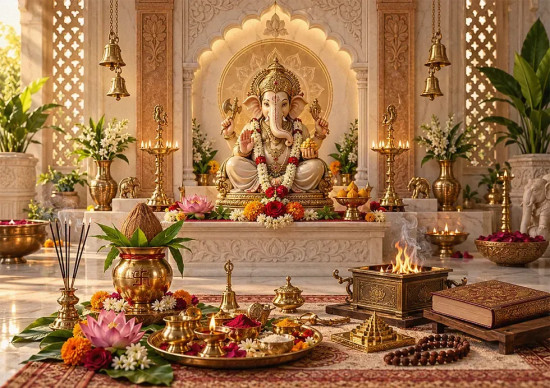
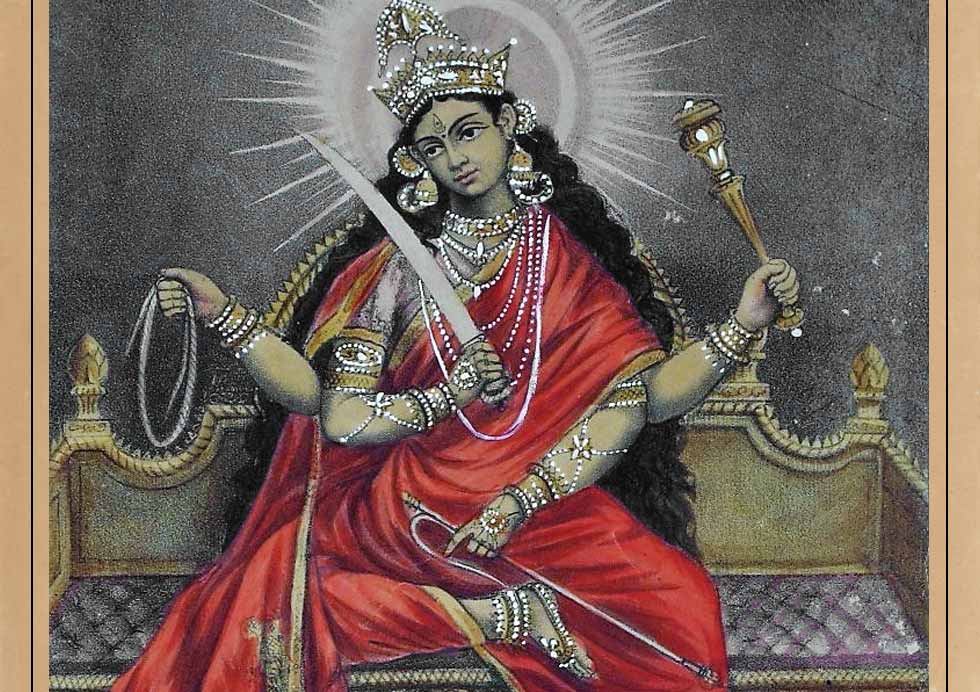
Matangi Devi is the ninth Mahavidya among the Dasa Mahavidya. She is related to speech, music, intellect, creativity, and the mysterious power that turns inner insight into expression. Although people often call her the Tantric Saraswati, her role extends beyond education and knowledge. As per Rudrayamala Tantram and Gupta Sadhna Tantram, she is the avatar of Adiparashakti. In this blog, we will discuss the Matangi Devi story, her origin, significance, and why she is called Tantric Saraswati.
Who Is Goddess Matangi in Hinduism?
Who Is Goddess Matangi in Hinduism?
People consider the Mahavidyas to be ten different deities. Before Matangi came Dhumavati. She is the goddess of loss, emptiness, and disappointment. Goddess Dhumavati clears the false identities and expectations. She brings the deeper truth when all the familiar comforts disappear. After this emptiness, Matangi comes. She teaches people how to come back to the world with more awareness and wisdom. Speech, creativity, and knowledge are all returned with her blessings. Many people keep Matangi Devi photos to seek her blessings as she converts knowledge into meaningful expression, teaching, music, language, and leadership. In many Tantric traditions, one cannot complete wisdom unless one understands, expresses, and uses it in daily life. Therefore, Devi Matangi often embodies the power that allows inner realization to express itself in the outer world.
The Sacred Matangi Devi Story
The Sacred Matangi Devi Story
The origin of Maa Matangi has many narratives as per Hindu texts and traditions. Some traditions depict that Matangi Devi emerged from the leftovers of a holy meal. People believed that Lord Shiva and Goddess Parvati shared a feast for Lord Vishnu and Goddess Lakshmi. Once they had the meal, the remnants, also known as uchchhista, carried divine energy. From the leftovers, Goddess Uchchhistha Matangi emerged.
A sage named Matanga connects another narrative of the Matangi Devi story. He performed prayers and meditation for many years. The divine mother, impressed with his devotion, appeared before him in the form of Goddess Matangi. From this story, Sage Matanga associates with Maa Matangi. People also refer to her as his daughter.
Why Is Maa Matangi Called the Tantric Saraswati?
Why Is Maa Matangi Called the Tantric Saraswati?
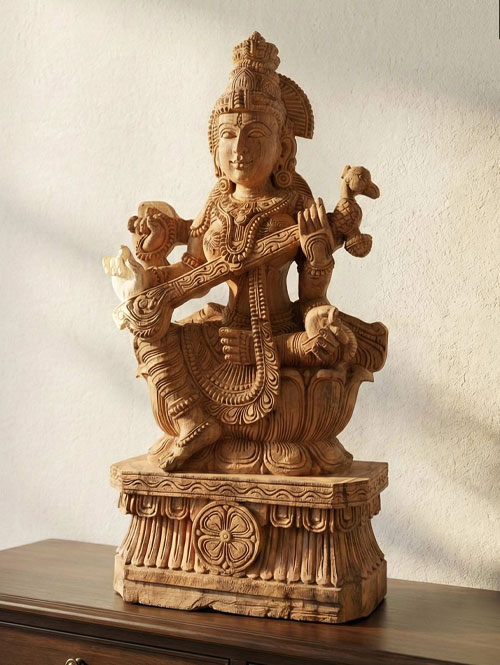
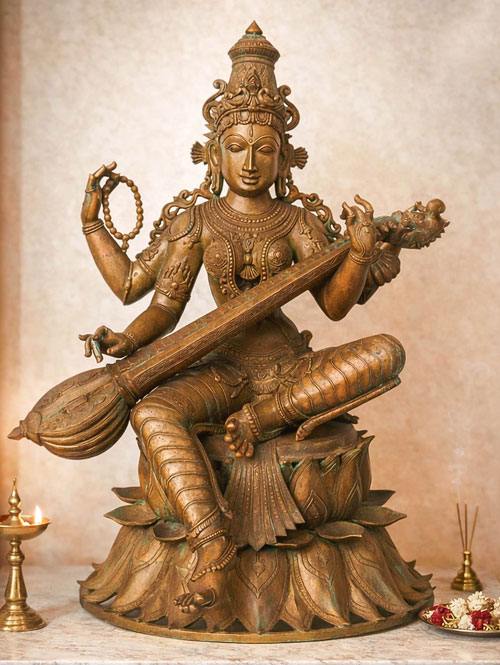
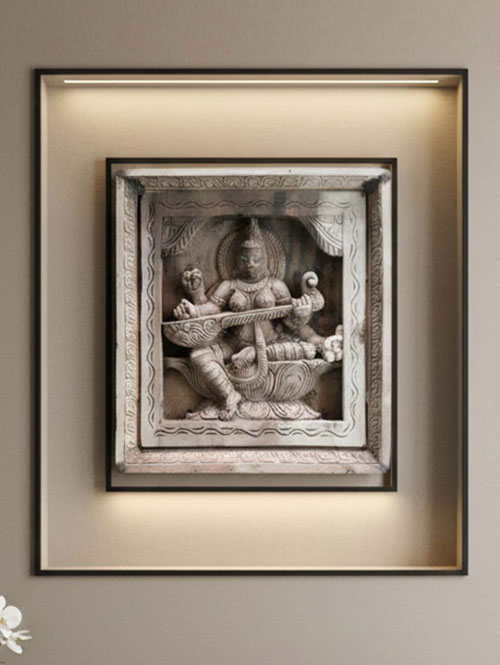
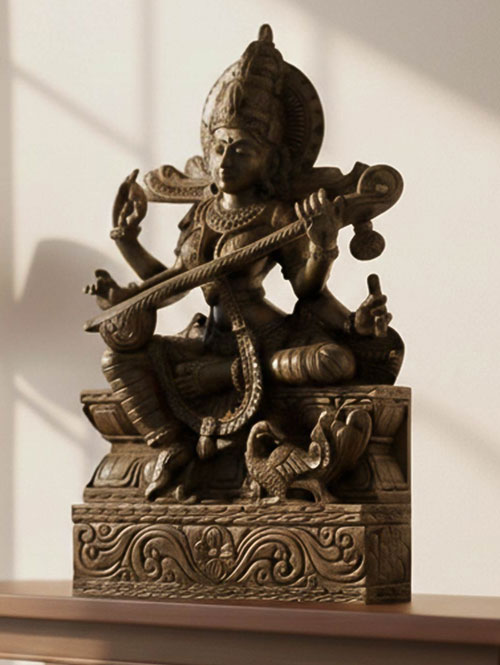
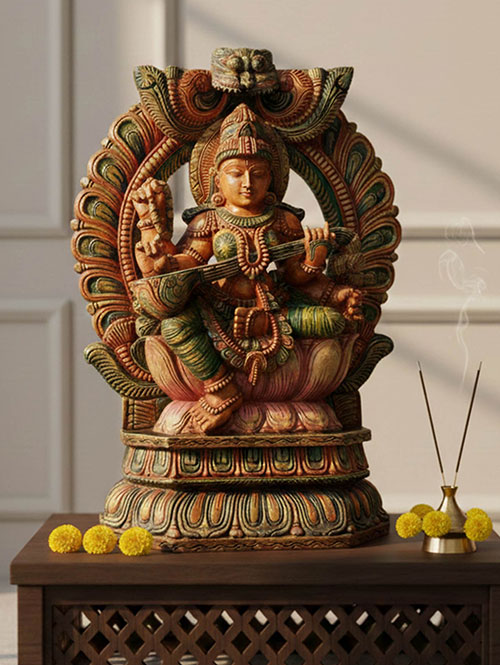
People also know Matangi Devi as Tantric Saraswati because both goddesses are associated with knowledge and speech. Goddess Saraswati blesses her devotees with learning, education, and knowledge. Students worship her as she motivates them to pursue knowledge through study. On the other hand, Matangi Devi represents the power to convey that knowledge. She helps them to speak properly, think creatively, and communicate confidently. Devotees pray to her for intelligence, creativity, and to express their thoughts clearly. Maa Saraswati and Maa Matangi are complementary to each other. Bring handcarved Devi Saraswati wooden statues to invite her blessings in your career. Saraswati blesses devotees with knowledge, while Matangi helps them to use and express that knowledge in a meaningful way.
The Spiritual Significance of Maa Matangi
The Spiritual Significance of Maa Matangi
Matangi Devi, the Tantric manifestation of Saraswati, is a fierce goddess. She rules over the domains of knowledge, speech, music, and the arts. Artisans show her in vivid emerald green in Matangi Devi murti. Maa Matangi represents things like impurity and inauspiciousness, and oddly associates with the opposite, even though people think of her as controlling such finer parts of life.
The most prevalent of her forms, Ucchishta Matangi, emphasizes this feature by holding a sword, goad, club, and noose in her hands. In actuality, ucchishta refers to partially consumed and leftover food, which is a symbol for pollution. Devotees actually offer this Goddess stale food with the left hand, which they deem impure. People also know her as Chandalini, the Goddess of Chandals, the lower classes. However, in her best known guise of Raja Matangi, she remains a monarch, seated on a throne, holding a parrot and playing veena.
How to Worship Matangi Devi at Home?
How to Worship Matangi Devi at Home?
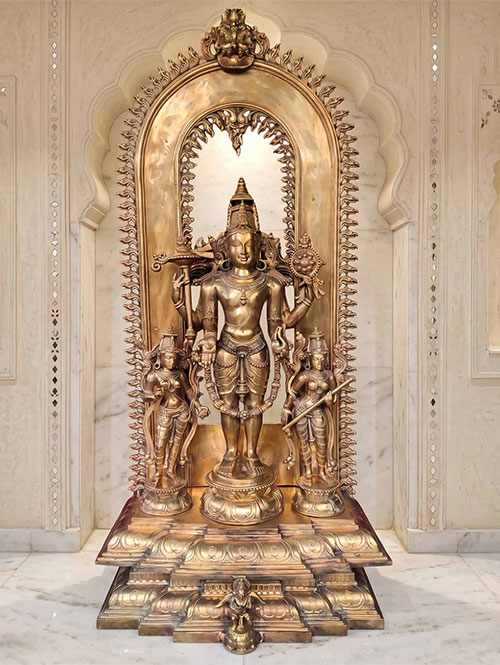
Tantra links Matangi Devi; however, temple worship also preserves her presence. Devotees believe her to be the incarnation of Goddess Saraswati. If you are planning to visit the Matangi Devi temple, there is no main temple for her. One is the Matangi Mata temple in Karnataka and the Raja Matangi Temple in Tamil Nadu. However, the most famous shrine of Mata Matangi is within the Kamakhya temple in Assam. People across the world visit this place to see the divine mother in the form of Maa Matangi. If you cannot visit this temple, you can worship her at home. You may bring a handcrafted Saraswati bronze statue from Cottage9 for your pooja room. Light a diya, offer fruits and flowers, and worship her with a pure heart.
Final Thoughts
Devi Matangi teaches her devotees that they should not conceal wisdom in the mind; they should express it. They need to communicate it through deeds, words, and intentiveness. Among all dasa mahavidya, she holds a prominent place as the goddess who transforms knowledge into expression. Maa Matangi is known as the Tantric form of Saraswati, so worshiping Maa Matangi with a wood carving of Devi Saraswati from Cottage9 can be the best way to seek her blessings. May Maa Matangi grant you the ability to speak clearly, self-assurance, and the wisdom to follow the path of dedication and knowledge.
FAQs
Who is Matangi Devi?
Maa Matangi is the ninth goddess of the dasa mahavidas. People worship her for speech, creativity, and knowledge. People also know her as Tantric Saraswati.
Can Devi Matangi and Saraswati be worshipped together?
Yes. Devotees worship Matangi Devi and Goddess Saraswati together with a Matangi Devi murti because both bless their followers with knowledge and wisdom. Devi Saraswati gives knowledge, and Matangi Devi blesses devotees to express knowledge and clarity.
Is Maa Matangi one of the Dasha Mahavidyas?
Yes. Maa Matangi is the ninth of the Dasha Mahavidyas, the ten great forms of Goddess Adi Shakti in the Shakta tradition. She stands for creativity and knowledge.
What does the parrot in Maa Matangi's iconography represent?
The parrot represents intelligence, speech, communication, and the ability to express clear ideas. Matangi Devo photos also illustrate Maa Matangi's association with wisdom.
Why is Maa Matangi shown holding a veena?
The veena is a symbol for knowledge, harmony, music, and artistic expression. It emphasizes Maa Matangi's relationship to the arts and her role in imparting knowledge via speech and sound.