
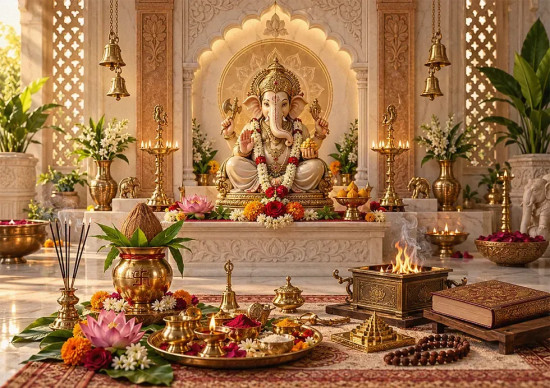
Walk into most Indian homes, and you will find a Ganesha murti somewhere, near the door or on a shelf. Most people who own one never ask why he only has one tusk. It is easy to miss. But once you know the story of Ganesha's broken tusk, you cannot look at that idol the same way again. This is not just an old tale filed away in some book. It is a story about giving something up so a bigger promise could be kept. It still shapes how millions of people think about devotion, work, and home today. Let us go back to where it started. In this blog, we will look at who really wrote the Mahabharata, why Ganesha broke his own tusk, what the name Ekadanta means, and why he is still called the Lord of Wisdom.
Who Wrote the Mahabharata?
Who Wrote the Mahabharata?
Ask “who wrote Mahabharata” and most people will say Ved Vyasa. That answer is true, but the complete story goes much deeper. Ved Vyasa is one of the most respected sages among all Indian epics. He held the entire Mahabharata in his mind, every verse, character, and twist. Composing it was one thing, but getting it onto paper without losing a single word was another problem entirely. That gap between knowing something and recording it is where our real story begins. That gap is exactly where Lord Ganesha walks in.
The Mahabharata Writing Story Explained
The Mahabharata Writing Story Explained
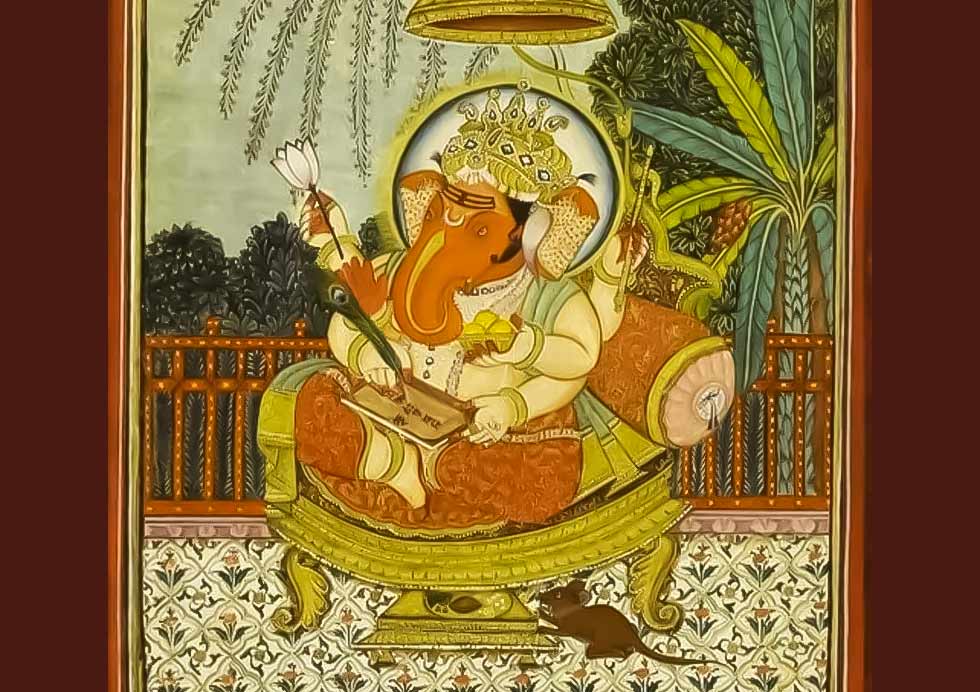
Vyasa needed a scribe fast enough, and careful enough, to keep up with him. So he went to Brahma for guidance. Brahma gave him one name without hesitation, and that name was Ganesha. He had a sharp mind and endless patience. Vyasa asked him for help, and Ganesha agreed but only after setting a condition of his own. He would write only if Vyasa recited without stopping, not once, not even to catch his breath. There would be no pauses and no breaks. That was the deal.
Three Stories Behind Ganesha's Broken Tusk
Story One: The Broken Pen During the Mahabharata
This is the story that most people are familiar with. Days into the recitation, Ganesha's pen finally gave out. There was no time to fetch another one without breaking the promise of unbroken writing. So he reached up, snapped off a piece of his own tusk, and kept going without missing a beat. This single decision is what most retellings mean when they talk about a broken tusk. It remains the most well known version of the story of Lord Ganesha's broken tusk across India.
Story Two: The Fight With Parashurama
In another telling, the sage Parashurama came to visit Mount Kailash to see Shiva. Ganesha, guarding the entrance while his father rested, refused to let him pass. Parashurama grew furious and hurled his axe at Ganesha. That axe had actually been a gift from Shiva himself, so Ganesha recognized it and chose not to dodge out of respect for his father. The axe struck his tusk and broke it clean off. This version is less about writing and more about honoring family, even at personal cost. It still explains the same broken tusk seen in every Ganesha murti today.
Story Three: The Curse on the Moon
The third story is a little different in tone. After a feast where Ganesha had eaten far too many modaks, he fell off his mouse while riding home. The moon, watching from above, burst out laughing at him. This made Ganesha embarrassed and angry. He cursed the moon. This is the reason why the moon disappears and reappears in phases. This telling shows a very human side of the god, a broken tusk driven by hurt pride rather than duty.
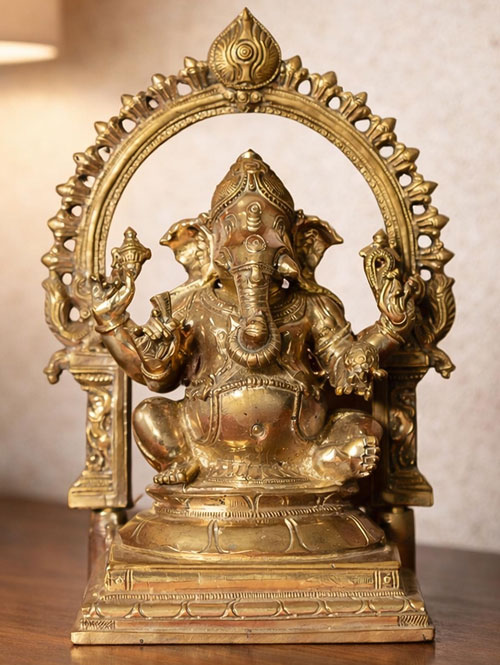
Spiritual Meaning Behind the Broken Tusk
Spiritual Meaning Behind the Broken Tusk
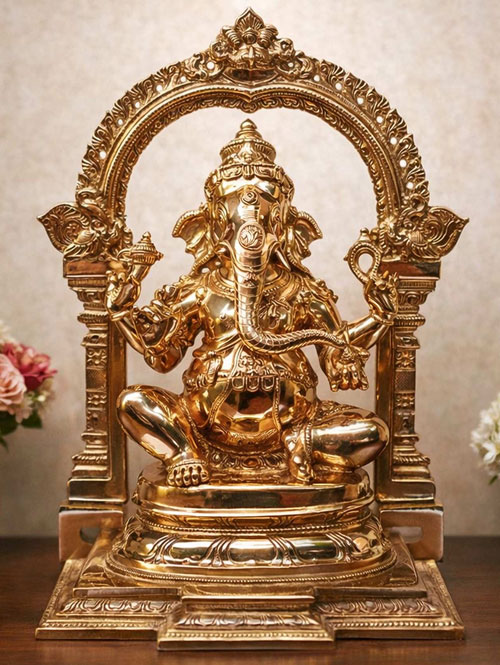
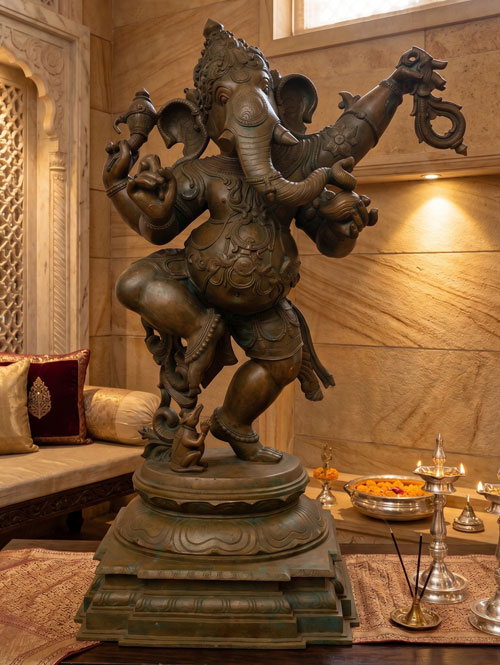
Across all three versions, the deeper meaning stays the same. Ganesha did not treat his own body as more valuable than the situation at hand, whether that meant keeping a promise, protecting his father's honor, or defending his own dignity. The tusk itself was never the point. It was simply a tool he was willing to give up. That is the real reason the story of Lord Ganesha's broken tusk has survived for so long. It is about what a person chooses to protect when something has to give. Keep the blessing of the Lord of Wisdom by bringing a wooden Ganesha statue home. Our artworks are inspired by timeless traditions. Bring home a Ganesha idol that inspires wisdom and positivity.
Ved Vyasa & Ganesha: A Divine Partnership
Ved Vyasa & Ganesha: A Divine Partnership
Ved Vyasa and Ganesha make one of the more memorable pairings in Indian scripture. Their partnership is worth pausing on separately from the tusk itself. Vyasa carried the vision for the entire epic in his mind. Ganesha carried the discipline to get it onto paper without a single break. Neither one could have finished the Mahabharata alone. Vyasa's memory would have meant nothing without a hand fast enough to keep up. Ganesha's skill would have meant nothing without an epic worth writing down. When the pen broke midway through, it was this partnership between Ved Vyasa and Ganesha that was actually being tested, and the tusk breaking is what kept that partnership from falling apart.
The Story of Ekadanta
The Story of Ekadanta
After the pen broke and the tusk took its place, people began calling Ganesha by a new name, Ekadanta, meaning the one with a single tusk. The story of Ekadanta only exists because of what happened that day.
- It marks the moment sacrifice turned into a permanent part of his identity.
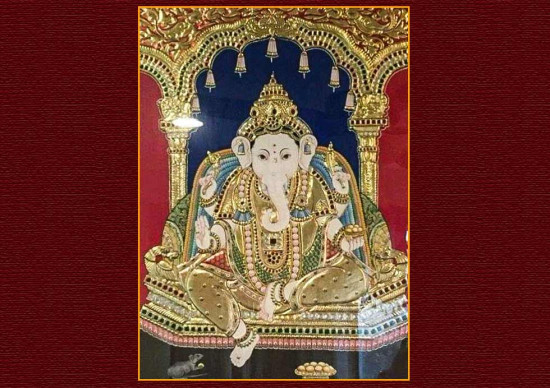
- His representation in art and idols often shows him with one full tusk.
- This symbolism reminds people that staying steady matters more than remaining perfect.
- The story connects directly to the Mahabharata writing episode instead of standing as a separate tale.
- The symbolism behind Ekadanta ties this story to the other important stories of Lord Ganesha discussed earlier.
Ganesha Lord of Wisdom
Ganesha Lord of Wisdom
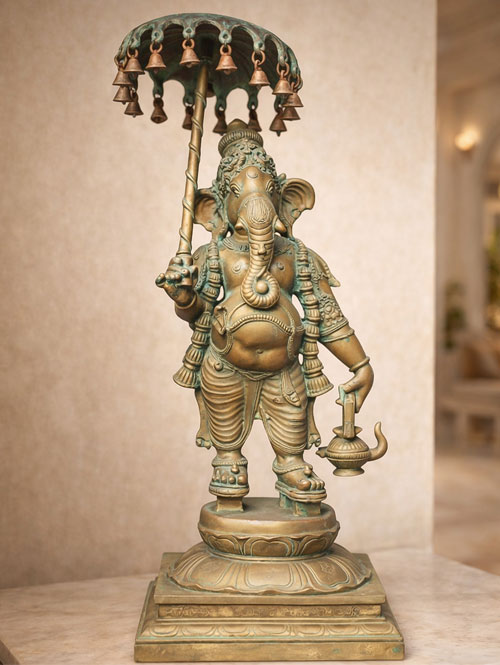
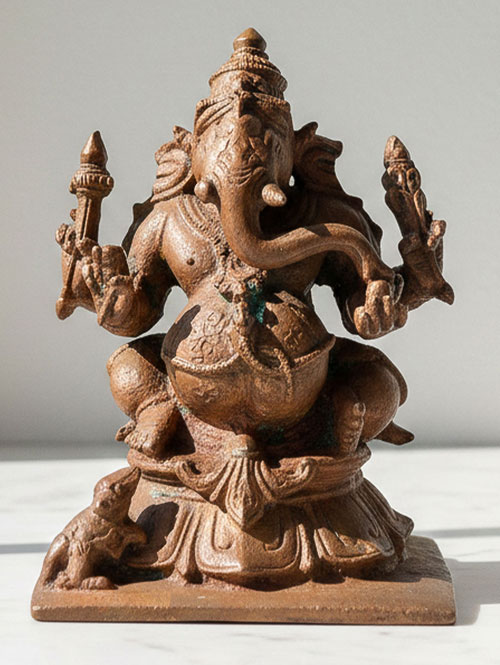
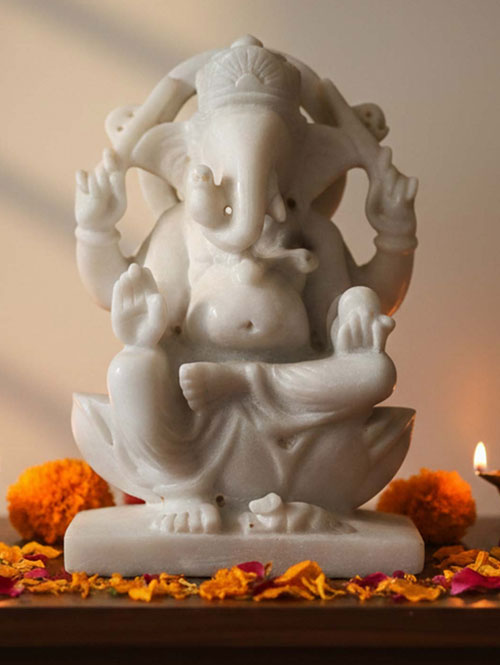
People refer to him as the Ganesha Lord of Wisdom for a reason that goes beyond general reverence. His decision to break his own tusk was not something he sat and debated for hours. It happened in an instant, faster than doubt. That kind of quick, grounded judgment is what wisdom actually looks like in practice, not just knowing facts but knowing how to respond the moment something breaks. This is why so many people invoke the Ganesha Lord of Wisdom title before starting something new, a business, a wedding, an exam, or even a hard conversation they have been avoiding. Bring a beautifully handcrafted bronze Ganesha murti for a daily reminder that wisdom often grows through patience and perseverance.
Lord Ganesha Stories in Everyday Life
You do not need to be religious to see why these Lord Ganesha stories still hold up. Life breaks its own plans all the time. Plans fall apart halfway through. Something you were counting on can stop working right when you need it most. Lord Ganesha stories can be helpful in everyday life.
- Students think of this story during exam preparation
- Founders think of it during hard years when resources run thin
- Artists think of it when a project stops going the way they imagined
- Families think of it during difficult situations at home
Each of these situations echoes the idea in Ganesha's broken tusk, adapting without losing sight of what actually matters.
Bringing Ganesha's Blessings Into Your Home
Bringing Ganesha's Blessings Into Your Home
Many families keep a Ganesha idol somewhere in the house. If you grew up around one, you probably already know exactly where your idol sits. Maybe it is near the front door, or on a small shelf close to the kitchen, catching the morning light. A handcrafted Ganesha idol tends to become more than decoration over the years. It slowly turns into a quiet reminder of patience. At Cottage9, our handcrafted Ganesha collections are shaped by hand rather than rushed off a production line. Each piece carries a little of that same story, the pen, the promise, and the choice made without hesitation.
Final Thoughts
The story of Ganesha's broken tusk is not a small footnote buried inside Hindu scripture. It is a lesson about what devotion actually costs and why paying that cost is worth it. Understanding the writer of the Mahabharata and everything that went into writing the Mahabharata brings you closer to a tradition that facts alone cannot fully explain. Ved Vyasa and Ganesha, together, remind us what real creation demands, trust, discipline, and two people who refuse to give up on a shared promise. A Cottage9 Ganesha idol keeps that same story sitting quietly in your home. As Ekadanta, he still has something to say if you are willing to sit with the story of Lord Ganesha a little longer.
Frequently Asked Questions
Who wrote Mahabharata originally?
Sage Ved Vyasa composed the Mahabharata and is credited as its original author. He needed a scribe who could keep pace with him, which is how Ganesha entered the picture. This is usually the first thing people learn when they ask who wrote Mahabharata in the first place.
Why is Lord Ganesha called Ekadanta?
The story of Ekadanta traces back to the moment his tusk broke. Lord Ganesha is also known as Ekadanta, which simply means the one with a single tusk.
What does Ganesha's broken tusk symbolize?
Ganesha's broken tusk symbolizes sacrifice and focus. It is about choosing something bigger than yourself over comfort or pride, even when it costs you something real.
Why does a handcrafted Ganesha idol always show only one full tusk?
Most traditional idols and murtis portray him intentionally as Ekadanta, with the broken tusk displayed as a constant reminder of the sacrifice he made while writing the Mahabharata.
Why is Ganesha considered the Lord of Wisdom?
In many Lord Ganesha stories, Ganesha is known as the Lord of Wisdom because of his selfless choice during the writing of the Mahabharata. This reflects wisdom that goes beyond knowing facts.