
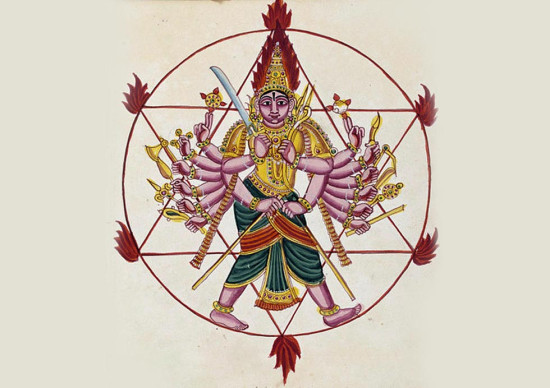
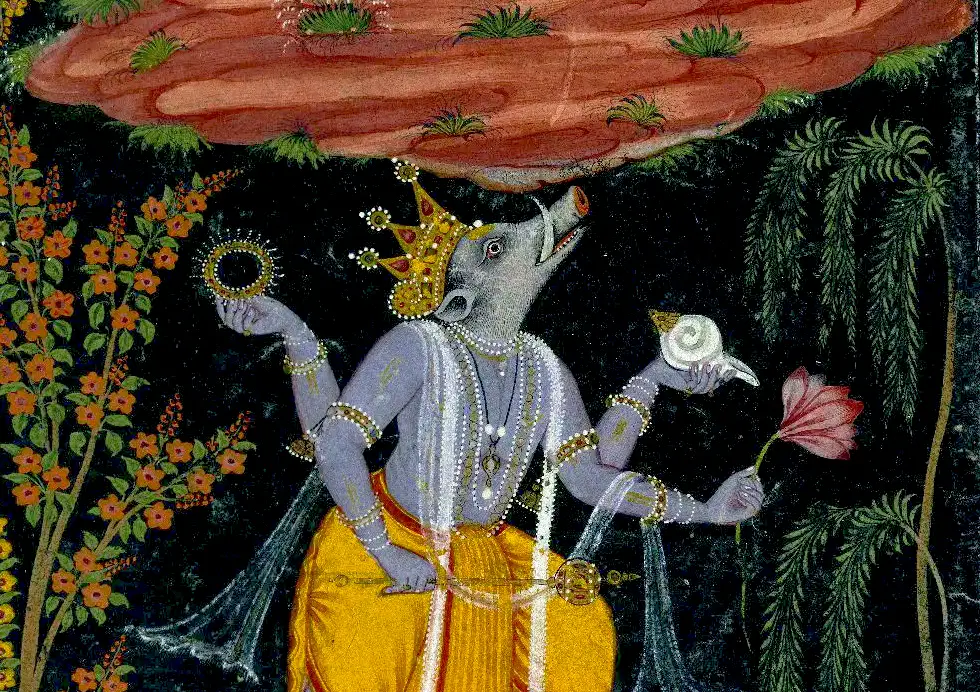
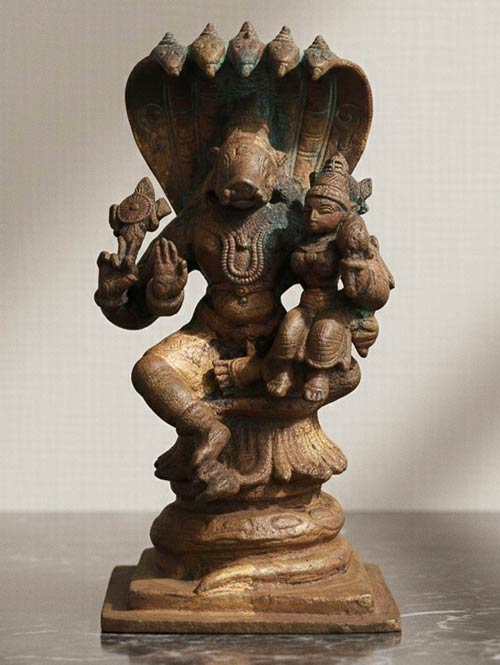
The Varaha and Bhudevi story is one of the oldest stories told about Lord Vishnu’s avatar. The Earth, as Bhudevi, submerged into the waters. At this time, Lord Vishnu took the avatar of a boar to rescue Bhudevi. He appeared as a giant boar, dove into the depths, and lifted her out on his tusks. The Vishnu Varaha avatar is the third avatar of Lord Vishnu. In this blog, we will discuss the story in order and explain the names and meanings.
Why Did Vishnu Take the Varaha Avatar?
Vishnu took the Varaha avatar when the world needed help. In the Bhagavata Purana, the need arises at the start of a new creation. Lord Brahma is the creator of the world. When he was about to prepare living beings, his first human couple, Svayambhuva Manu and Shatarupa, asked him for a place to live. However, nowhere could they see the Earth. She had sunk below the waters, far out of Brahma’s reach. Brahma could not take Bhudevi out. He then thought deeply about Lord Vishnu, and a tiny boar slipped from his nostril. Many people asked why a boar. Some Puranas, such as the Brahmanda Purana, say the form suited the task because boars love water.
Who Is Bhudevi?
Bhudevi is another name for Earth. She is considered a goddess. She is also called Prithvi, Bhumi, or Bhu Devi. In Sanskrit, Bhudevi literally translates to “Earth goddess.” Many readers see Bhudevi as a symbol of patience. People call her this because she carries every living thing. Her conversations with Varaha form the foundation of the Varaha Purana.
Bhudevi and Lakshmi are Different Goddesses
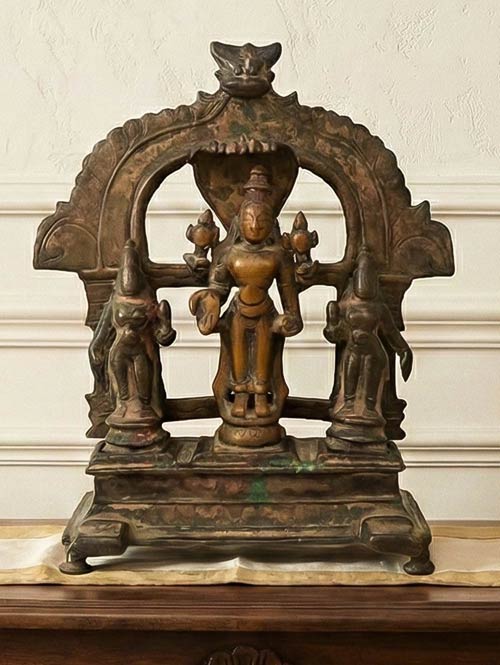
Lakshmi is Vishnu’s wife and the goddess people pray to for prosperity. On the other hand, Bhudevi is the earth. Many Lord Vishnu idols show him with Sridevi, who is Lakshmi, and with Bhudevi. Both goddesses are different. They both have separate roles.
The Complete Varaha and Bhudevi Story
A Tiny Boar Becomes a Giant
While Brahma was lost in thought, a tiny boar, no bigger than the top of a thumb, came out of his nostril. Brahma was astonished and watched in wonder. In a moment, the tiny boar grew as huge as an elephant. Then, Brahma realized this was Vishnu himself.
How Varaha Rescued Bhudevi
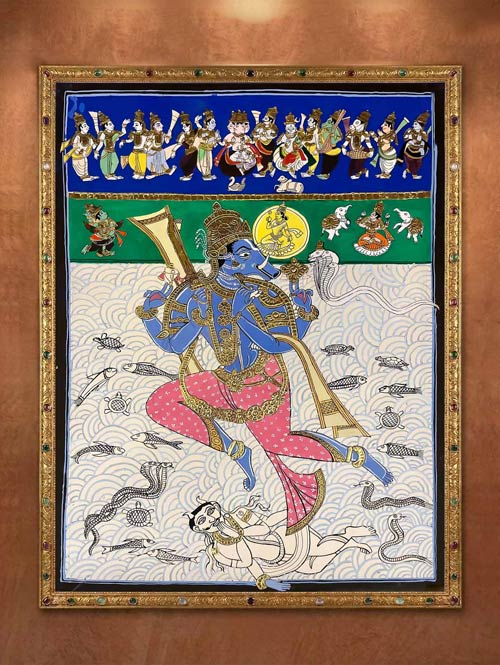
Varaha has a strong smelling ability. He jumped into the water and smelled the earth. Then, he followed the smell of Bhudevi and went to the lowest depth. He found the earth and very gently lifted Bhudevi on his tusks. This moment is the heart of Vishnu Varaha avatar. The Bhagavata Purana describes him as radiant as he rose from the ocean with the Earth resting on his tusks.
Who Was Hiranyaksha?
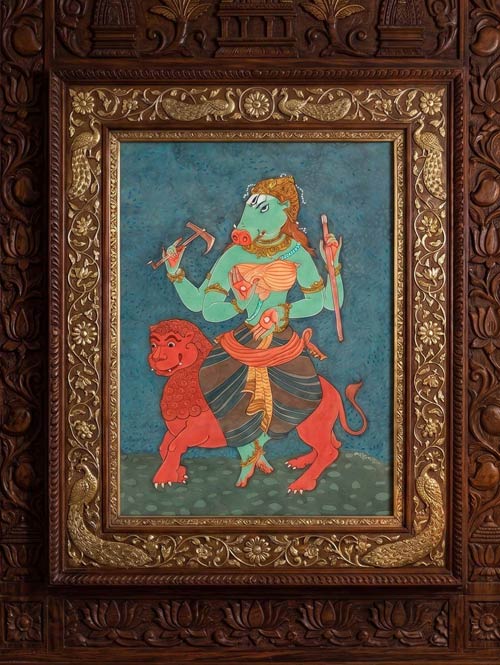
Hiranyaksha was a powerful asura, or demon, and the son of sage Kashyapa and Diti. His brother was Hiranyakashipu. The Bhagavata Purana links their birth to a curse that someone placed on Jaya and Vijaya, the two gatekeepers of Vishnu's heaven, sending them to be born as his enemies. Hiranyaksha was so proud of his strength that he roamed the worlds with his mace and challenged the gods. Varuna, who is the god of water, told him that the only perfect rival for him is Lord Vishnu. Sage Narada then told Hiranyaksha where Lord Vishnu could be found.
The Battle Between Varaha and Hiranyaksha
Hiranyaksha found Varaha rising from the depths with the earth on his tusks. He mocked the boar and demanded a fight. Varaha first placed Bhudevi safely on the surface of the water, where she floated. Then he turned to face the demon. A fierce mace fight followed. Hiranyaksha struck in rage, and Varaha dodged and answered with force. Brahma watched from above and prayed the demon’s strength would grow at dusk. Varaha then struck the final blow, and Hiranyaksha fell. The gods praised the Lord, and the earth set her back in her place.
How Traditional Accounts Are Different
Not all the texts narrate the story of Varaha and Bhudevi alike. In the Bhagavata Purana, when creation was just starting, the earth was under the waters. Hiranyaksha arrives after Varaha lifts her. Some other accounts say that it was Hiranyaksha who submerged the earth in the waters. Vishnu took an avatar to stop him. The Vishnu Purana keeps its attention on the lifting itself, as Prithvi speaks to Varaha and he raises her from the waters. It does not describe the duel in the same detail. The final blow also varies. One passage mentions Varaha’s tusks, while the other describes a mace fight between them. According to older Vedic texts, the name Prajapati is a form of Brahma, the boar. The Puranas later identify the boar fully with Vishnu.
What the Varaha Avatar Teaches
The story of the Vishnu Varaha Avatar shows the world's protection from chaos. Hiranyaksha stands for pride and unchecked power. Varaha is the endless strength to protect others. The earth in safe repose on his tusks serves as a reminder to devotees to care for nature and respect the Bhudevi Goddess. Many people also read the dive into the deep as a sign that Vishnu reaches even the lowest places to save someone. These are traditional readings, and teachers explain them in different ways. This is why people still retell the Varaha and Bhudevi story at festivals and carve it in temples.
Varaha: Among the Ten Avatars of Vishnu
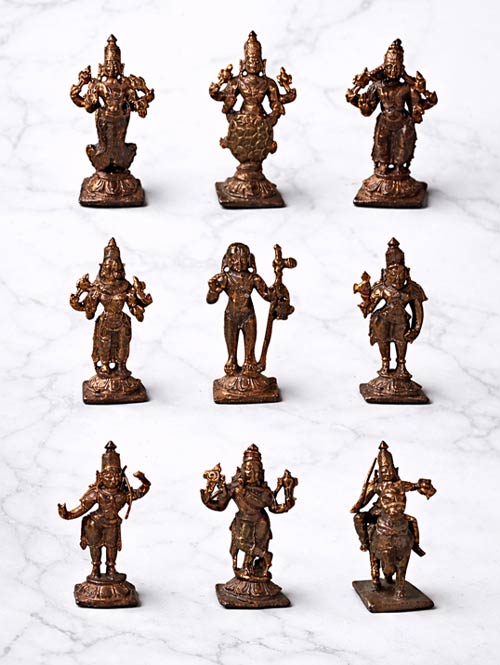
The Dashavatara is the list of Vishnu’s ten main forms. A common order is Matsya (fish), Kurma (tortoise), Varaha (boar), Narasimha (half man, half lion), Vamana (dwarf), Parasurama, Rama, Krishna, Buddha, and Kalki. Some traditions list them slightly differently. You can read why Vishnu took these forms in our Dashavatara story or begin with the Matsya avatar.
The Varaha avatar of Vishnu is the third, and it leads into the next story. Narasimha later defeats Hiranyaksha’s brother, Hiranyakashipu. To see the avatars together, look at Cottage9’s antique style Dashavatara statues of Vishnu. South Indian artisans made a set of nine small copper idols in a traditional style, inspired by how the avatars appear in old Mysore and Tanjore paintings.
A Vishnu Lakshmi idol for the Home Shrine
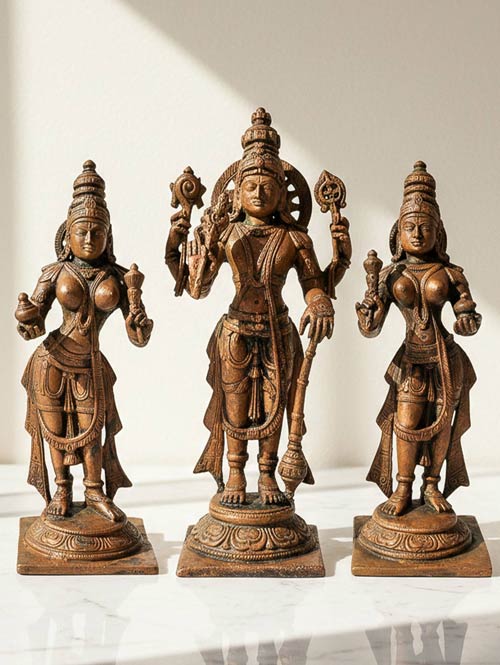
Artists often show Vishnu with Lakshmi. If you want a Vishnu Lakshmi idol, Cottage9 offers the Garuda Vahana Vishnu and Lakshmi brass idol. It is based on Chola art and cast using the lost-wax method. Lakshmi sits on Vishnu’s left lap as Garuda carries them. Vishnu holds a chakra and a conch and blesses devotees with his right hand. Note that this idol shows Lakshmi, not Bhudevi, so it suits a general Vishnu shrine rather than a Varaha scene. You can also explore our brass statues and copper statues collections.
Final Thoughts
The Varaha and Bhudevi story carries a simple promise at the heart of Vaishnava belief: when the world is in danger, Vishnu comes to its rescue. The Varaha avatar of Vishnu protects the Bhudevi Goddess and, through her, all living beings. Whether you read the Bhagavata Purana, visit a Varaha temple, or place a Vishnu Lakshmi idol in your shrine from Cottage9, the story stays clear and moving.
Frequently Asked Questions
What happened to the old Ram Lalla idol after the new idol installation?
The old idol was also placed in the sanctum, in front of the new one. It has been worshipped for about 70 years, which is an important part of Ram Mandir murti history.
What is the new Ayodhya Ram Mandir Murti called Ram Lalla or Balak Ram?
It is called Balak Ram because it shows Lord Ram as a five-year-old boy. Many people still call it Ram Lalla, which also means child Ram.
How was the Ram Mandir Ayodhya murti chosen?
The temple trust chose it by vote. On 15 January 2024, it announced Atn Yogiraj’s idol, backed by 11 of 15 members, mainly for how closely it resembled the child form of Ram Lalla.
Was the Ram Mandir murti made from Nepal’s Shaligram stone?
No. Shaligram rocks from Nepal reached Ayodhya but were not used, as trial rocks reportedly developed cracks. The idol was carved from black stone sourced near Mysuru in Karnataka.
When was the Ram Mandir Murti placed in the sanctum?
The idol was placed on its seat in the sanctum on 18 January 2024. The main Pran Pratishtha ceremony followed on 22 January 2024.