
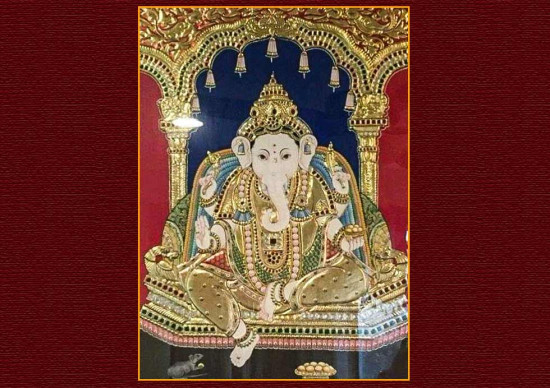
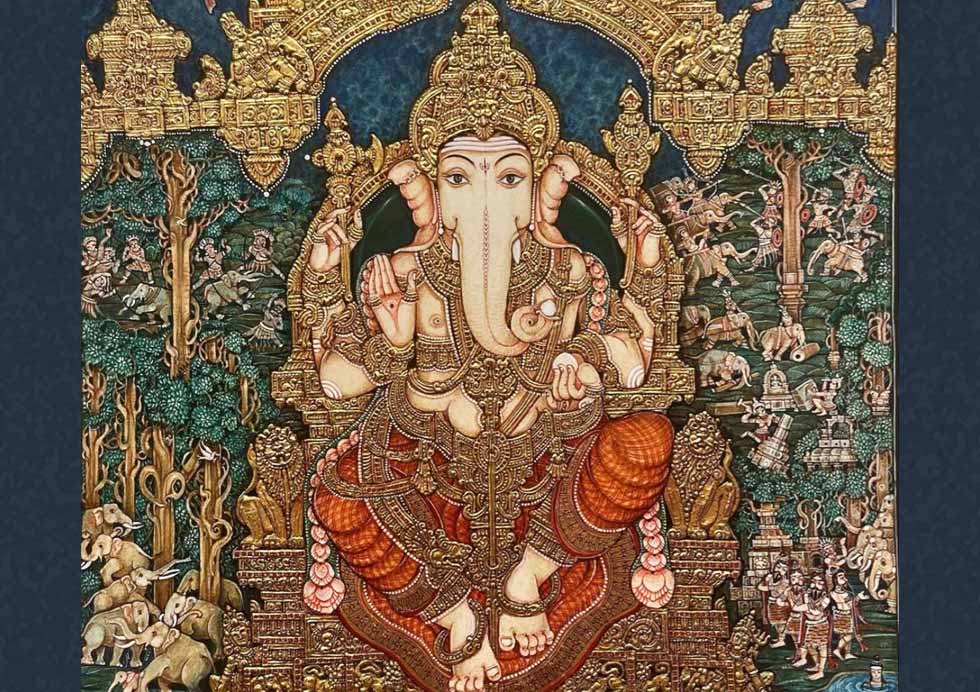
Standing in front of a Ganesha idol, holding a Tulsi leaf? Traditionally, that leaf does not go on the plate. The reason comes from the Ganesha and Tulsi story, an old tale where Tulsi approached Lord Ganesha and was turned away. That rejection led to a curse between the two. Because of it, many Ganesha Puja practices traditionally avoid Tulsi as an offering. Even though she is offered freely to almost every other deity. In this blog, we will walk through the story behind this belief and what devotees offer to Ganesha instead.
Why Is Tulsi Not Offered to Lord Ganesha?
Why Is Tulsi Not Offered to Lord Ganesha?
Tulsi holds a special place in Hindu homes. They offer her to Krishna, to Vishnu, to countless other deities. She stands for purity and devotion. So it catches people off guard when they learn that they keep her away from Ganesha puja. It is not that Tulsi is any less sacred. The reason traces back to the Ganesha and Tulsi story, where the two ended up cursing each other.
Over generations, that incident hardened into a belief that Tulsi and Ganesha simply do not belong in the same ritual. Most devotees don't treat this as a hard rule. They treat it as a mark of respect for what the story represents. Some families are strict about avoiding a Tulsi offering to Ganesha. Others have never even heard of the custom. Some see it as a regional habit rather than something fixed.
The Ganesha and Tulsi Story
The Ganesha and Tulsi Story
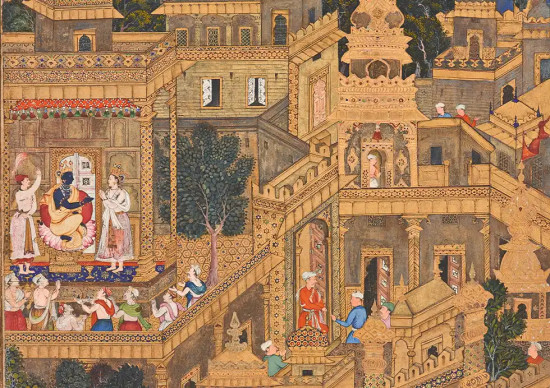
The Tulsi Ganesha story goes something like this. Tulsi, in her earlier form, was deep in meditation. She was hoping to find a husband who would be right for her. While travelling near a riverbank, she came across Lord Ganesha, seated in his own meditation. Ganesha committed himself to living a celibate life. His presence struck Tulsi. She felt drawn to him and proposed marriage. Ganesha, bound by his vow, said no. Different tellings shape this moment a little differently. The main part of the story remains unchanged.
What Happened Between Tulsi and Ganesha?
What Happened Between Tulsi and Ganesha?
Tulsi did not take the rejection well. Hurt turned to anger. In some versions, she cursed him, saying he would marry not once but twice. People often link this to two consorts of Ganesha, Riddhi and Siddhi, who represent prosperity and success. Ganesha cursed her back. He said she would one day marry a demon, and that she would eventually become a plant on Earth. This part of the story connects to later tales, where Tulsi marries Shankhachuda and undergoes her transformation.
The exchange was rooted in rejection, not blessing. That is why a belief formed around Ganesha Puja rituals and beliefs, don't offer Tulsi to Ganesha. Doing so, according to tradition, would go against the spirit of what passed between them.
Can Tulsi Leaves Be Used for Ganesh Puja?
Can Tulsi Leaves Be Used for Ganesh Puja?
This is probably the question you came here for. Based on tradition, no. People generally avoid Tulsi leaves for Ganesh Puja. Most priests and older households will point you toward Durva grass instead. But don't treat this as absolute. The practice can vary for several reasons:
Region
People in Maharashtra, where they widely celebrate Ganesh Chaturthi, may follow slightly different customs than those in South India or Bengal.
Family Tradition
Some families have worshipped a certain way for generations and do not deviate.
Local Priests
The local priest, who often leads the puja, decides which offerings he uses.
Personal Awareness
Plenty of devotees have never heard this story and see no issue with offering Tulsi.
So instead of saying Tulsi can never be offered to Ganesha, it is fairer to say Tulsi leaves for Ganesh Puja are traditionally avoided. Most people follow that out of respect for the story. Not everyone enforces it strictly.
What Is Traditionally Offered to Lord Ganesha?
Tulsi steps aside. Here is what usually takes her place:
Durva grass
The most important offering of all. Devotees believe it to be one of Ganesha's personal favourites, and most pujas include it without fail.
Modak
A sweet, steamed dumpling filled with jaggery and coconut. People widely consider it Ganesha's favourite food, so it usually takes the centre spot on the puja plate.
Red flowers
Devotees see red as an auspicious colour in Ganesha worship. Worshippers most commonly offer flowers, especially hibiscus, to him.
Coconut
Devotees offer coconut whole or broken open as a gesture of surrender and gratitude toward the deity.
Fruits
Devotees place bananas and other seasonal fruits as simple, everyday offerings of devotion.
Red sandalwood paste
Red sandalwood paste, also known as rakta chandan applied to the idol during rituals. This is a mark of respect and part of the traditional puja process.
Each one carries its own small story. But together, they share a theme of joy, auspiciousness, and a direct connection to what Ganesha is believed to love.
Why Is Durva Grass Offered to Ganesha?
If one offering is inseparable from Ganesha worship, it is Durva grass. It has its own special significance in Ganesha worship. Tradition links Durva grass to cooling, calming energy. People say Ganesha has a particular fondness for it. One popular story explains why Durva grass is used in Ganesha puja traditions. Ganesha once suffered from severe stomach pain after overeating, and Durva grass gave him relief. Since then, offering it has been seen as something that pleases him directly.
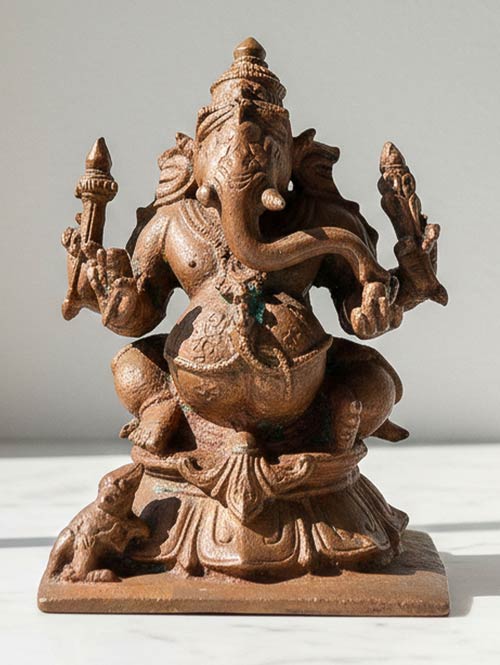
Devotees tie Durva grass into small bunches, usually 21 blades, and place them at the bronze Ganesha idols feet. It is easy to find. People have deeply woven this grass into ritual, which is part of why it has stayed so common.
Ganesha Puja Traditions and Rituals
Ganesha Puja Traditions and Rituals
Ganesha Puja traditions share a few consistent threads, even across different households. The puja usually opens by invoking Ganesha as the remover of obstacles. Chanting follows, along with offerings of flowers, Durva grass, and sweets. An aarti with a lit lamp usually closes the ritual.
During Ganesh Chaturthi, many families bring an idol home for a set number of days. It could be a day and a half. It could be ten. Eventually, someone immerses the statue in water. Timing and length vary a lot between regions, families, and even individual temples. What stays the same is the feeling behind it that is devotion, gratitude, and the hope that Ganesha clears the path ahead.
Creating a Traditional Ganesha Puja Space
Creating a Traditional Ganesha Puja Space
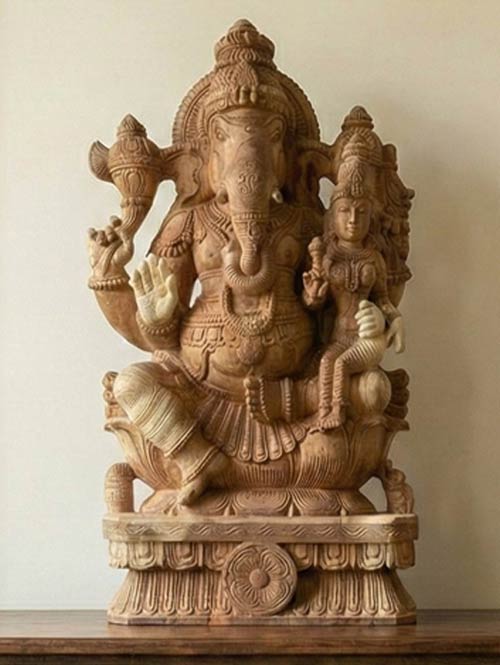
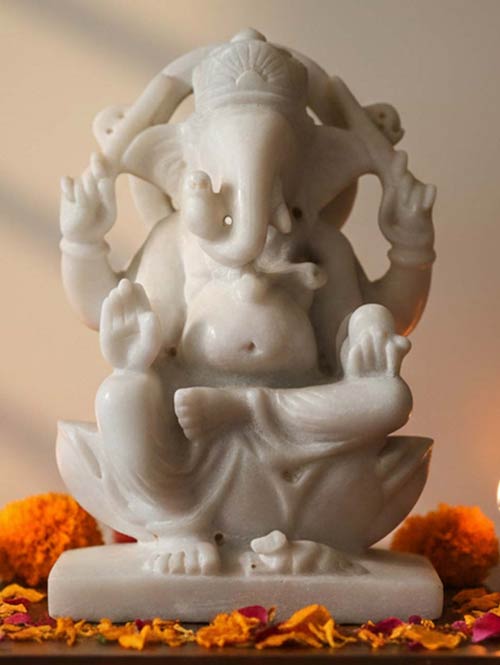
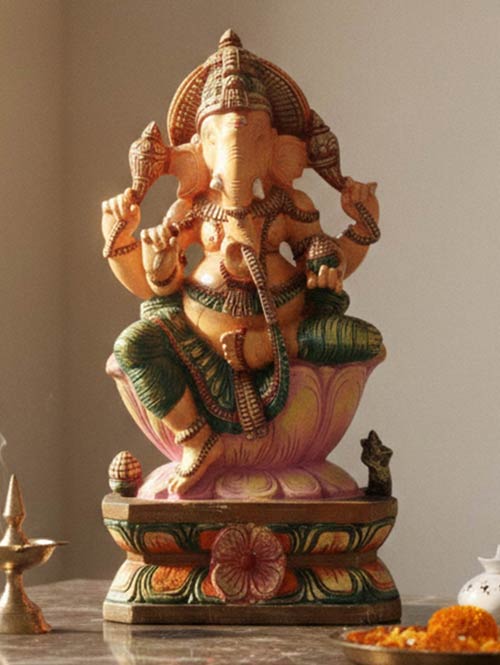
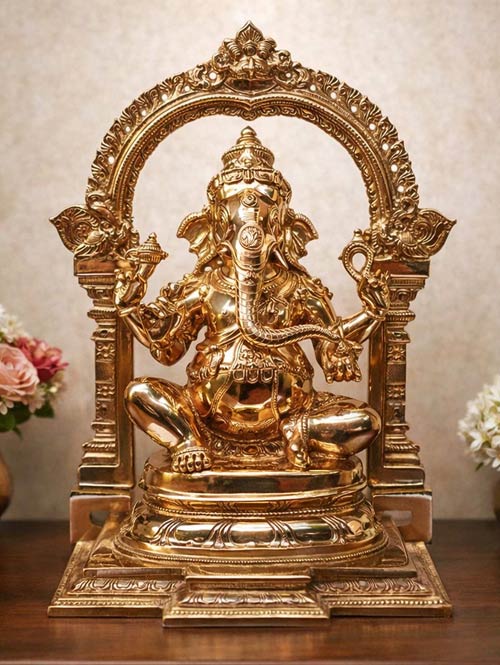
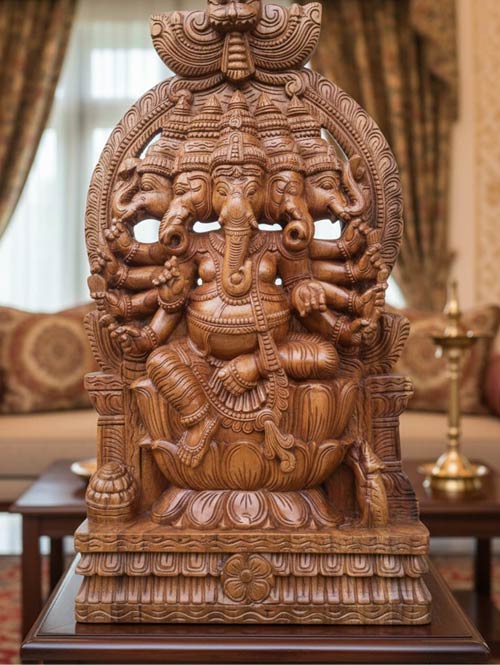
A lot of people asking about the Tulsi Ganesha story are also thinking about their puja space. The right idol. The right offerings. A room that feels calm and intentional. The idol often becomes the centre of that space. If you are looking for something handcrafted, Cottage9 has a collection of traditional handcrafted Ganesha murtis and devotional decor made in the spirit of Indian craftsmanship. We do not mass-produce these pieces. They feel personal. Whether it is for daily worship or Ganesh Chaturthi, a thoughtfully made murti adds a quiet weight to the ritual around it.
Final Thoughts
An old story involving a proposal, a rejection, and curses on both sides leaves Tulsi out of Ganesha puja. People follow it out of respect, not out of rigid rule, and these Ganesha Puja rituals and beliefs still vary from home to home. If you are wondering what to offer instead, Durva grass, modak, and red flowers are the traditional picks for Ganesha worship. If you are setting up your puja space, at Cottage9, we have handcrafted Ganesha statues and devotional decor that are worth a look too. At the end of the day, it is the devotion behind the offering that matters most to Ganesha.
Frequently Asked Questions
Why is Tulsi not offered to Lord Ganesha?
Devotees avoid Tulsi leaves for Ganesha puja because of a traditional story where Tulsi proposed marriage and was refused. Curses followed on both sides. Out of respect for that story, Tulsi is usually left out of Ganesha worship.
What is the Ganesha and Tulsi story?
Tulsi, drawn to Ganesha's meditative form, proposed marriage. Ganesha refused because he had sworn to be celibate. The rejection resulted in curses from both sides, and that is how the idea that they are not worshiped together was formed.
Which leaves are offered to Lord Ganesha?
At the top of the list is durva grass. Red flowers like hibiscus come next. Some regional traditions also use bilva leaves.
Are Tulsi and Ganesha worshipped together?
Generally, no. Because of the traditional story behind their curses, most households keep the two separate during worship. Tulsi continues to be worshipped on her own, while Ganesha puja follows its own set of offerings and rituals.
Which type of Ganesha idol is best for a home puja?
For daily worship or immersion, a small clay or eco-friendly idol works well. For a permanent puja space, a handcrafted idol in brass, marble, or wood is the best choice, like the ones from Cottage9.